


















Glowing Views from the Space Station
NASA astronaut Chris Williams captured the Milky Way rising above Earth’s atmospheric glow on April 13, 2026, while aboard a SpaceX Dragon docked to the International Space Station. This atmospheric glow is also called airglow. It occurs when atoms and molecules in the upper atmosphere, excited by sunlight, emit light to shed their excess energy. […]
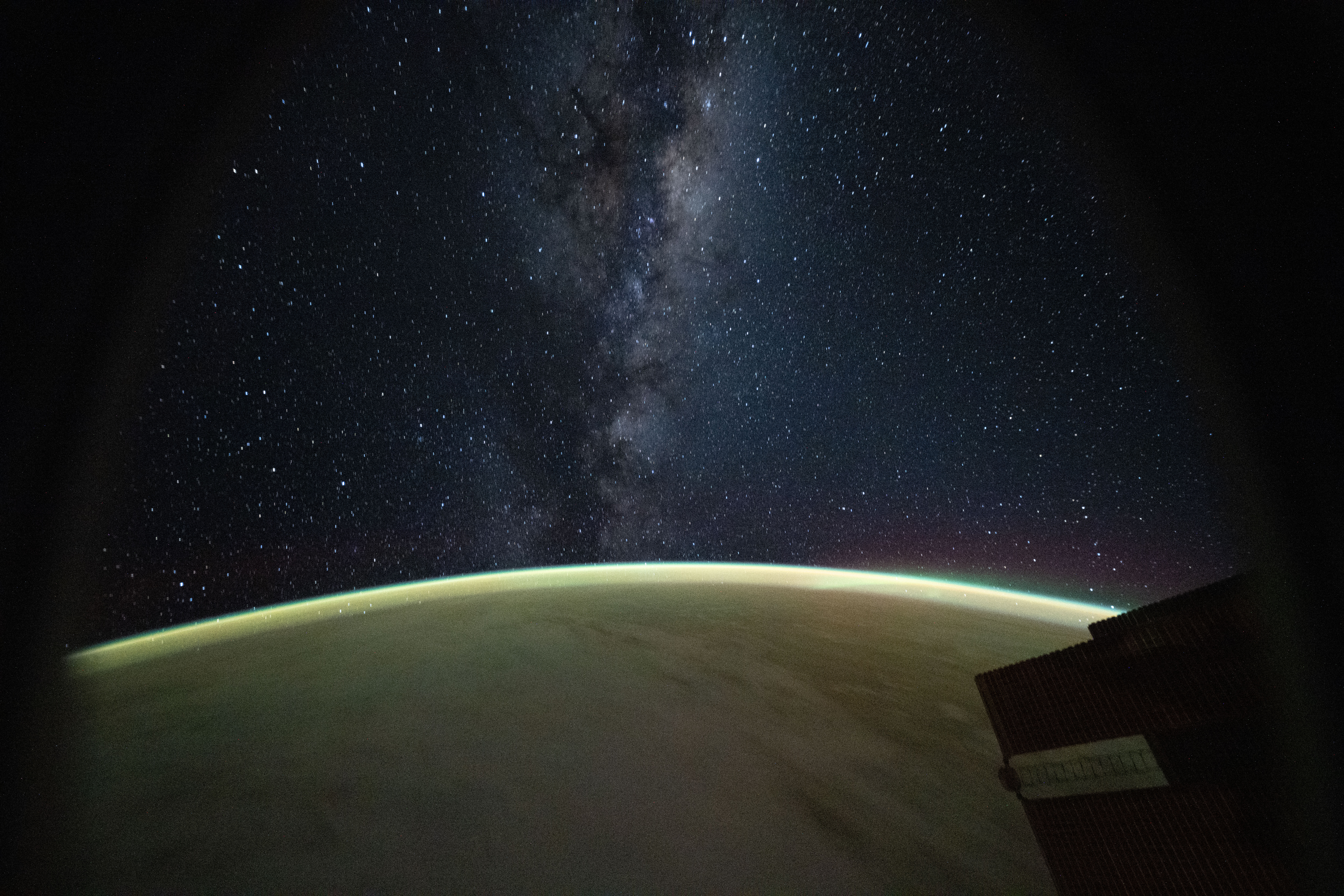
NASA astronaut Chris Williams captured the Milky Way rising above Earth’s atmospheric glow on April 13, 2026, while aboard a SpaceX Dragon docked to the International Space Station.
This atmospheric glow is also called airglow. It occurs when atoms and molecules in the upper atmosphere, excited by sunlight, emit light to shed their excess energy. Alternatively, it can happen when atoms and molecules that have been ionized by sunlight collide with and capture a free electron. In both cases, they eject a particle of light — called a photon — in order to relax again. The phenomenon is similar to auroras, but where auroras are driven by high-energy particles originating from the solar wind, airglow is energized by ordinary, day-to-day solar radiation.
Image credit: NASA/Chris Williams
What's Your Reaction?