

















Keeping NASA Flying: Ground Crews Ensure Aircraft Readiness
From high‑speed research flights to high‑altitude science campaigns, NASA depends on aircraft that perform at their best and the ground crews who keep them mission ready. At NASA’s Armstrong Flight Research Center in Edwards, California, specially trained maintenance crews are essential to keeping the agency’s aircraft flying safely and reliably. This year, NASA added two […]
4 min read
Preparations for Next Moonwalk Simulations Underway (and Underwater)
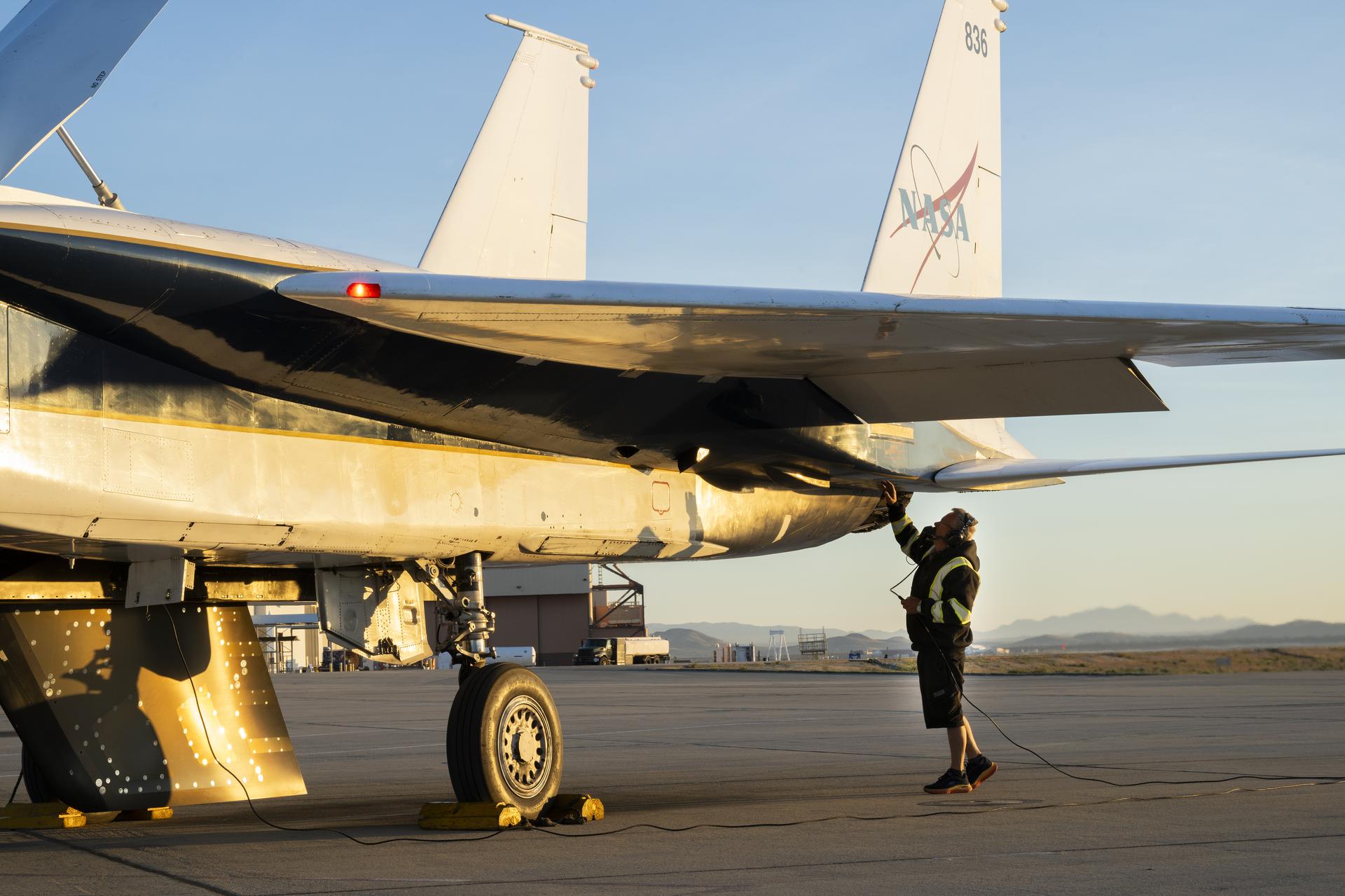
From high‑speed research flights to high‑altitude science campaigns, NASA depends on aircraft that perform at their best and the ground crews who keep them mission ready.
At NASA’s Armstrong Flight Research Center in Edwards, California, specially trained maintenance crews are essential to keeping the agency’s aircraft flying safely and reliably.
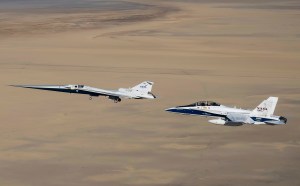
This year, NASA added two F-15s and a Pilatus PC-12 to its fleet at Armstrong. These aircraft – alongside platforms such as the high-altitude ER-2s and NASA’s newest X-plane, the X-59 – reflect a wide range of capabilities. The maintenance staff is responsible for keeping each one mission ready.
“That’s the beauty of our Armstrong maintenance teams. They adapt to any type of change,” said Jose “Manny” Rodriguez, NASA Armstrong Gulfstream G-IV crew chief. “One day you could have an instrument being loaded, and the next day it may be aircraft reconfiguration, all while other aircraft systems may need fixing. They adapt and they overcome any situation.”
Each aircraft supports a specific mission, whether it’s conducting science research, serving as a support or chase aircraft, or assisting NASA rocket launches. The aircraft fly at different speeds, carry specialized hardware, and require maintenance crews to stay agile with fast-paced changes.
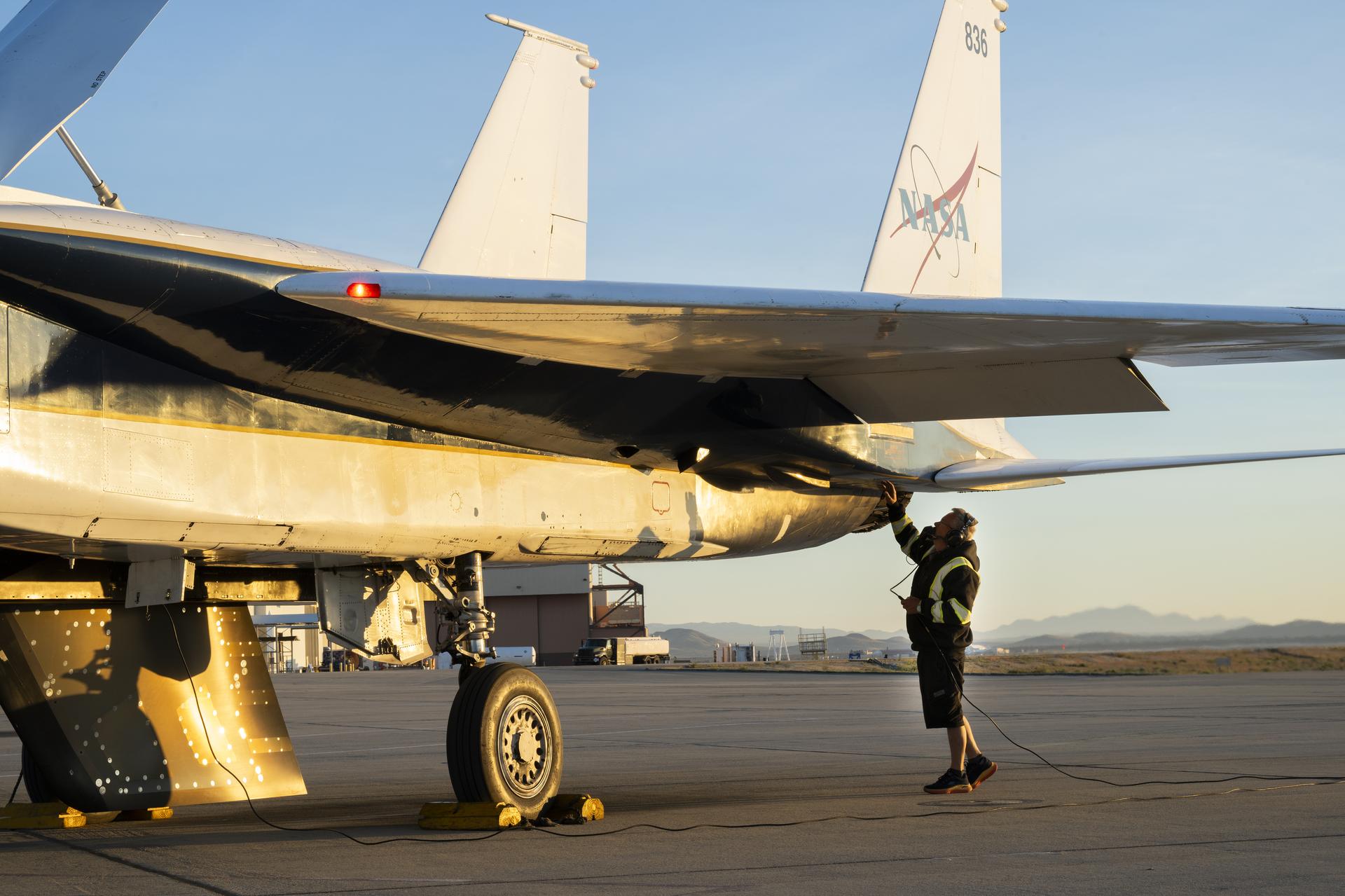
To ensure NASA can make aeronautics and science advancements safely, the crews work continuously, checking on the ejection seats, filling the tanks with fuel, and changing out brakes, wheels, wiring, and hardware constantly, all of which can degrade with each flight.
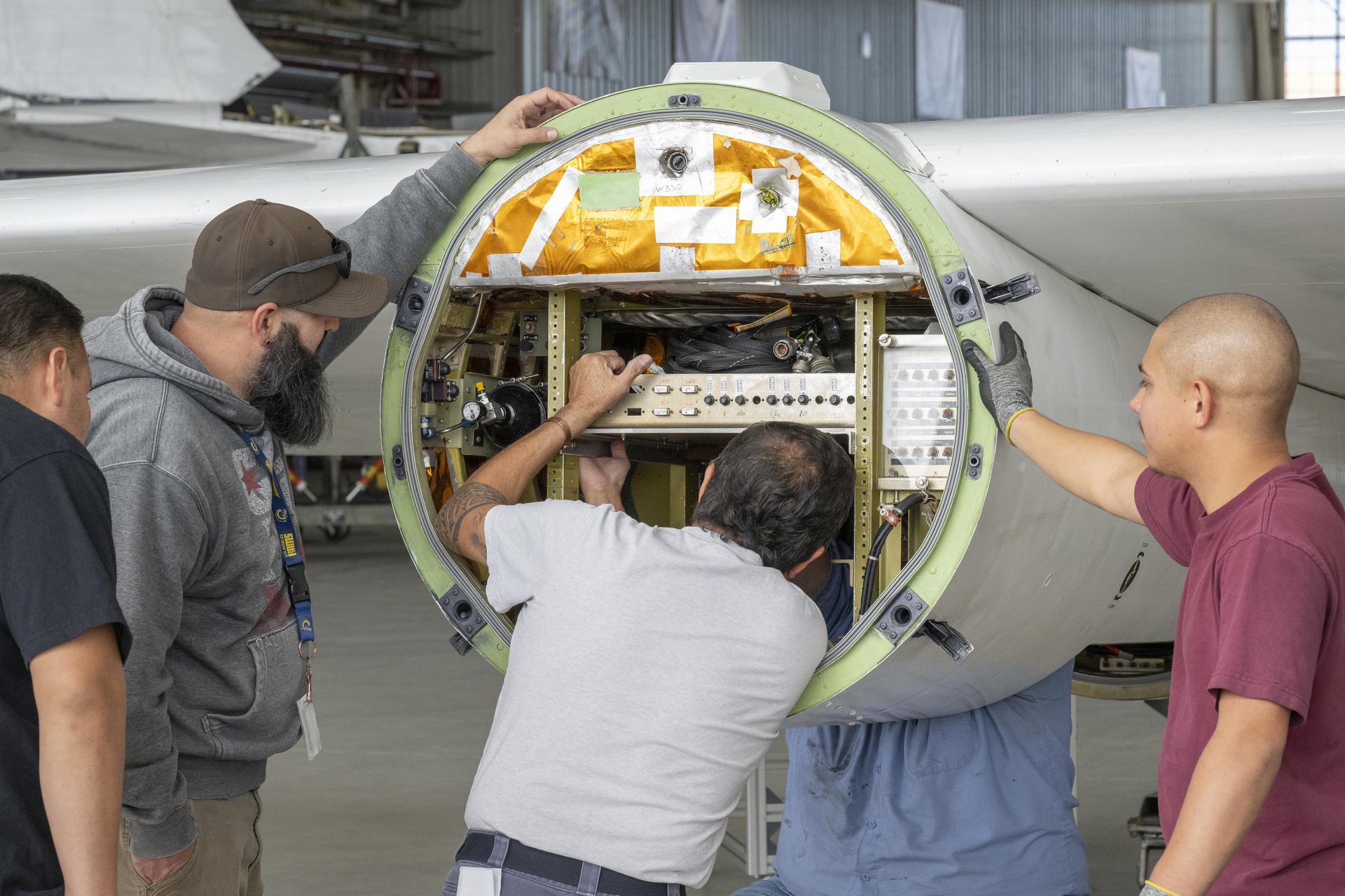
On any given day, an aircraft may be flight-ready for a mission, undergoing scheduled maintenance or modifications, or down for longer-term care.
There are typically multiple NASA Armstrong aircraft in the air in one day. Currently, the center’s C-20A is flying in Peru and Panama, the X-59 is often flying twice per day with a chase plane, and the center’s ER-2 is flying in Colorado, supporting the Geological Earth Mapping Experiment (GEMx). All this work is happening at the same time, and Armstrong’s skilled maintenance staff is prepping and fixing aircraft as needed along the way.
The team includes mechanics with both military and civilian backgrounds, and the job involves a lot of on-the-job training.
Maintenance crews are composed of:
- a crew chief – the person in charge of the airplane
- an avionics technician, who specializes in navigation, communication, and flight control systems
- quality assurance personnel, who oversee the work being done
- additional mechanics assigned to each airplane
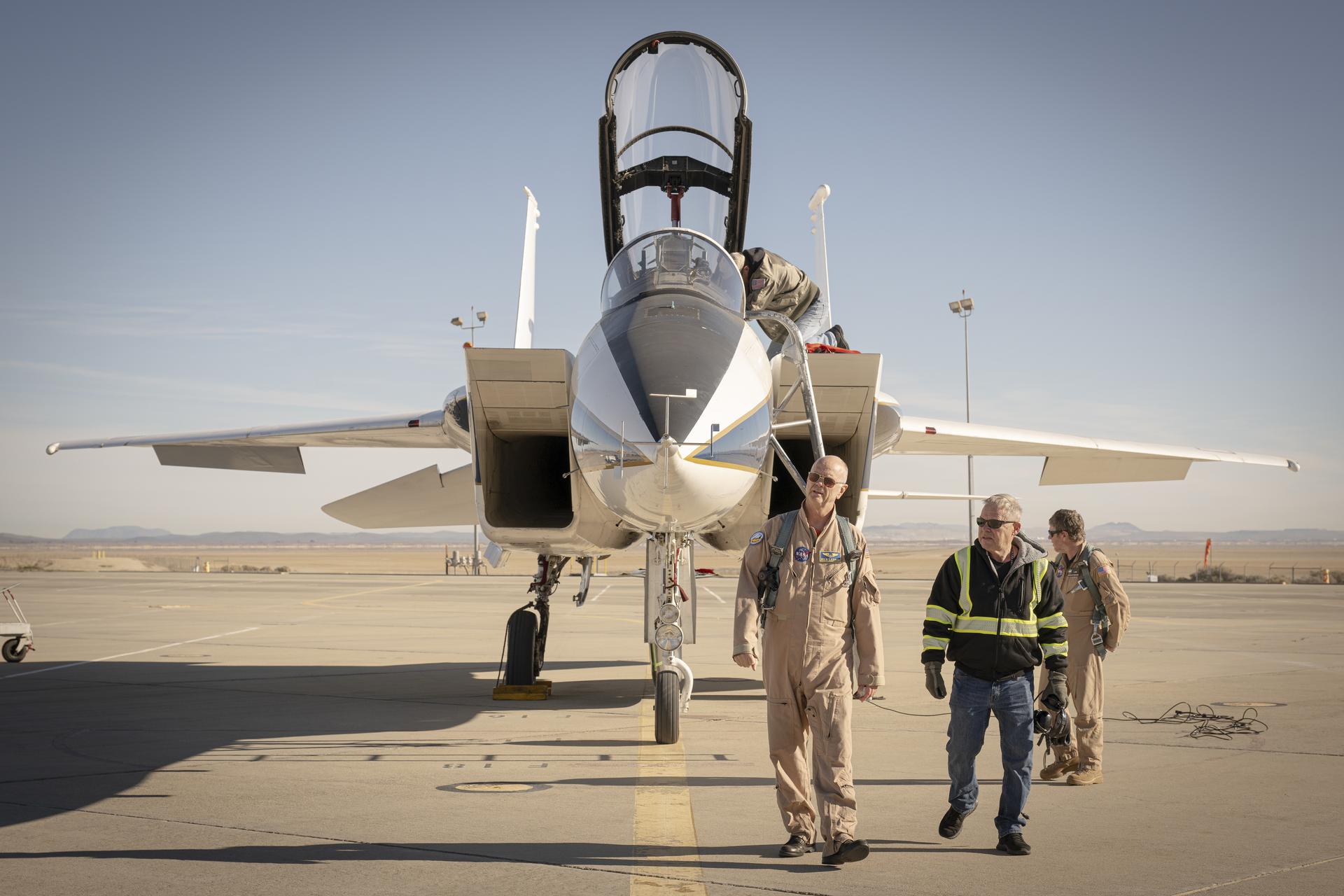
After the maintenance crew ensures the aircraft is in the best condition possible, the team tows it out to the flightline, and it becomes ready for operations. The NASA pilot assigned to the mission will walk around the aircraft with the assigned crew chief for a final safety check before flight.
“There is a crew chief assigned to every aircraft,” Rodriguez said. “The crew chief is responsible for the integrity of that aircraft, and at the end of the day, his signature and the pilot’s together are what constitutes that the aircraft is safe for flight.”
Maintenance crews track each flight to help ensure it completes the mission without returning early. If an aircraft does return to base early, the maintenance team stands ready. When it lands, the crew is right there again, helping the research team complete the mission and fixing whatever is needed to stay nimble and ready for the next flight.
“It’s difficult at times to work with different airplanes from both the civilian and military sides, but it’s very rewarding to see that we have the capability and the expertise to keep these aircraft flying,” Rodriguez said.
Share
Details
Related Terms
Explore More





What's Your Reaction?