








Microplastics may be changing the colour of the Pacific Ocean
Satellites show that the ocean around a gyre of plastic detritus in the Pacific is brightening and changing colour, with the most likely explanation being microplastics suspended in the water column

The sea around the Great Pacific Garbage Patch is changing colour, and microplastics may be to blame.
The Great Pacific Garbage Patch (GPGP), located roughly midway between Hawaii and California, covers around 1.6 million square kilometres and is thought to contain nearly 80,000 tonnes of plastic debris, carried there by ocean currents.
Near the surface of the ocean in parts of the garbage patch, microplastic densities may reach up to 17 milligrams per cubic litre.
Advertisement
While most concern about the vast patch has focused on its impact on sea life and environmental health, three separate datasets have shown distinct colour changes in the ocean itself.
Other recent research has found that the world’s oceans are generally darkening for a variety of reasons, including agricultural runoff and phytoplankton growth.

“The ocean’s colour is created from the interaction of sunlight with seawater and all the things contained in it, and therefore the colour is indicative of the ocean’s content,” says Shea Cheatham at the University of Bergen, Norway.
The unique circulation patterns that have created the garbage patch have also created an area much more likely to experience the kind of microplastic accumulation needed to be detectable from space, she says.
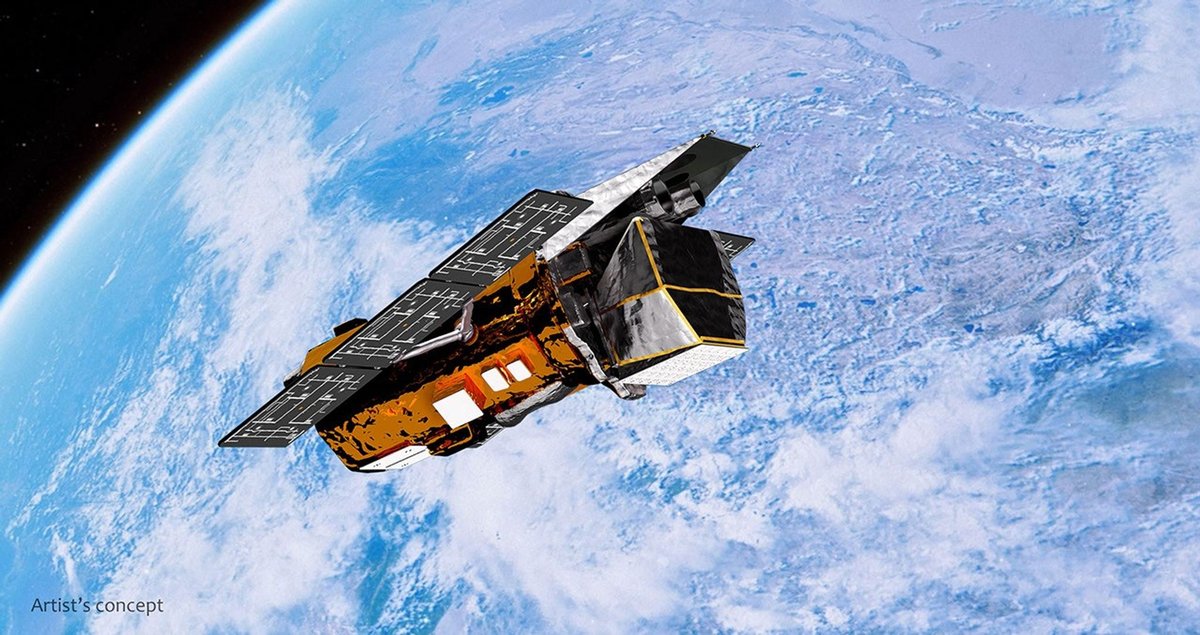
Cheatham and her colleagues analysed three satellite datasets collected between 2002 and 2022. The data showed that parts of the GPGP saw an approximately 10 per cent increase in blue light and a 2 to 4 per cent increase in green light over the 20-year period.
Not all of the satellites agreed on the extent of the blue and green brightening, which together create the colour cyan, but all found that some brightening had occurred.
To try to work out what was causing the brightening, the researchers used computer simulations to test how the ocean’s colour would theoretically change if microscopic pieces of plastic were added to the water. They also simulated how the ocean’s colour would change from natural things, like more or different micro-algae and other material.

“We found that brightening of the water in both blue and green light is rarely produced by natural changes,” says Cheatham. “When we included microplastic particles in our simulations, this pattern we saw near the Great Pacific Garbage Patch of brightening in both blue and green light became more than four times as likely.”
Microplastic particles, in contrast to most natural contributors to ocean colour, do not absorb very much light, she says, but scatter light strongly. “This means that as their quantities increase in the ocean, they cause the ocean to brighten, and this brightening happens most strongly at blue-green wavelengths.”
Tim Smyth at the Plymouth Marine Laboratory in the UK says the team has shown that the colour change might be caused by microplastics, without actually proving it.
“In short, this is compelling evidence for a potential satellite signature of microplastic accumulation, rather than evidence that satellites have actually detected the microplastics themselves,” says Smyth.
Communications Earth & Environment DOI: 10.1038/s43247-026-04071-0
What's Your Reaction?