







NASA calls off rescue effort to save doomed telescope
The Swift observatory will now re-enter Earth’s atmosphere in a few months, after a mission to boost it higher failed

The Neil Gehrels Swift Observatory is doomed to burn up in Earth’s atmosphere in the coming months, after a high-risk effort to save it failed.
On Wednesday 20 August, NASA said in a statement that an ongoing issue with the LINK spacecraft, built by US startup Katalyst Space, meant that an effort to dock with and boost Swift in orbit would no longer be attempted.
“NASA should be willing to move quickly and take smart risks when the potential return is worth it, and that is exactly what we did with this mission,” NASA Administrator Jared Isaacman said in the statement. “This is not the outcome we were working toward, but it does not change why this mission was worth attempting.”
Advertisement
LINK was launched in July on a mission to save Swift, a rapid-response telescope used to observe brief celestial events such as gamma-ray bursts. It has been steadily dropping in orbit since its launch in 2004 due to atmospheric drag. The $30 million rescue mission, designed and built in less than a year, was a last-ditch attempt to boost the telescope back into a higher orbit.
Soon after launching, however, LINK began to spin out of control. While Katalyst later stabilised the spacecraft, it was deemed to have used too much fuel in the process to make the boost possible.
“Katalyst designed, developed, and launched an experimental spacecraft to go after an ambitious mission on an aggressive timeline,” the company’s CEO, Ghonhee Lee, said in a statement. “We took on this high-risk, high-reward challenge and are proud of the milestones we reached along the way.”

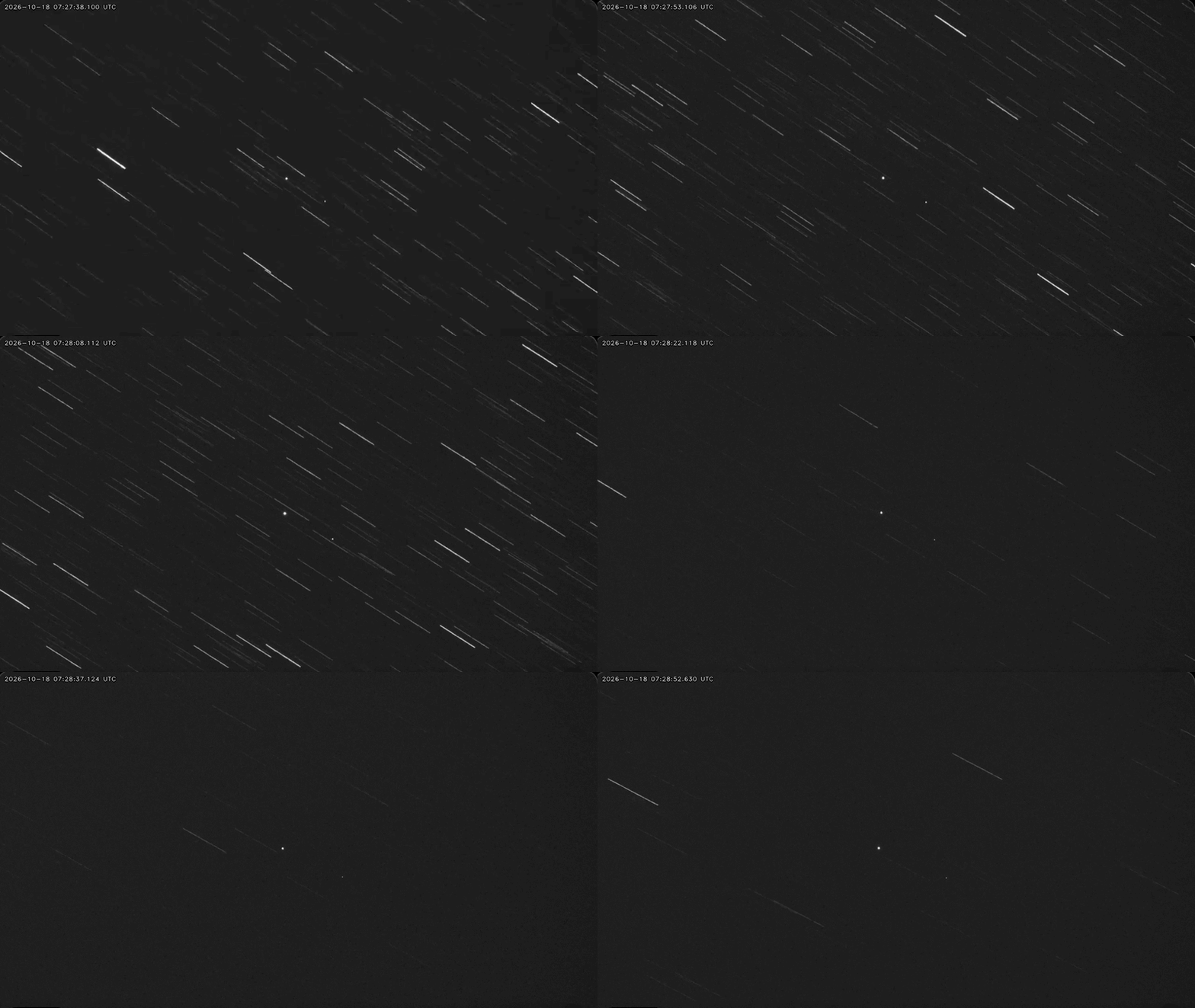
LINK will still rendezvous with Swift, but will no longer attempt to grab the telescope with its robotic arms. That means Swift will have a limited amount of final observations it can do before it re-enters the atmosphere by the end of the year, with no replacement telescope currently in the works.
What's Your Reaction?