

















NASA Fuel Cell Tests Pave Way for Energy Storage on Moon
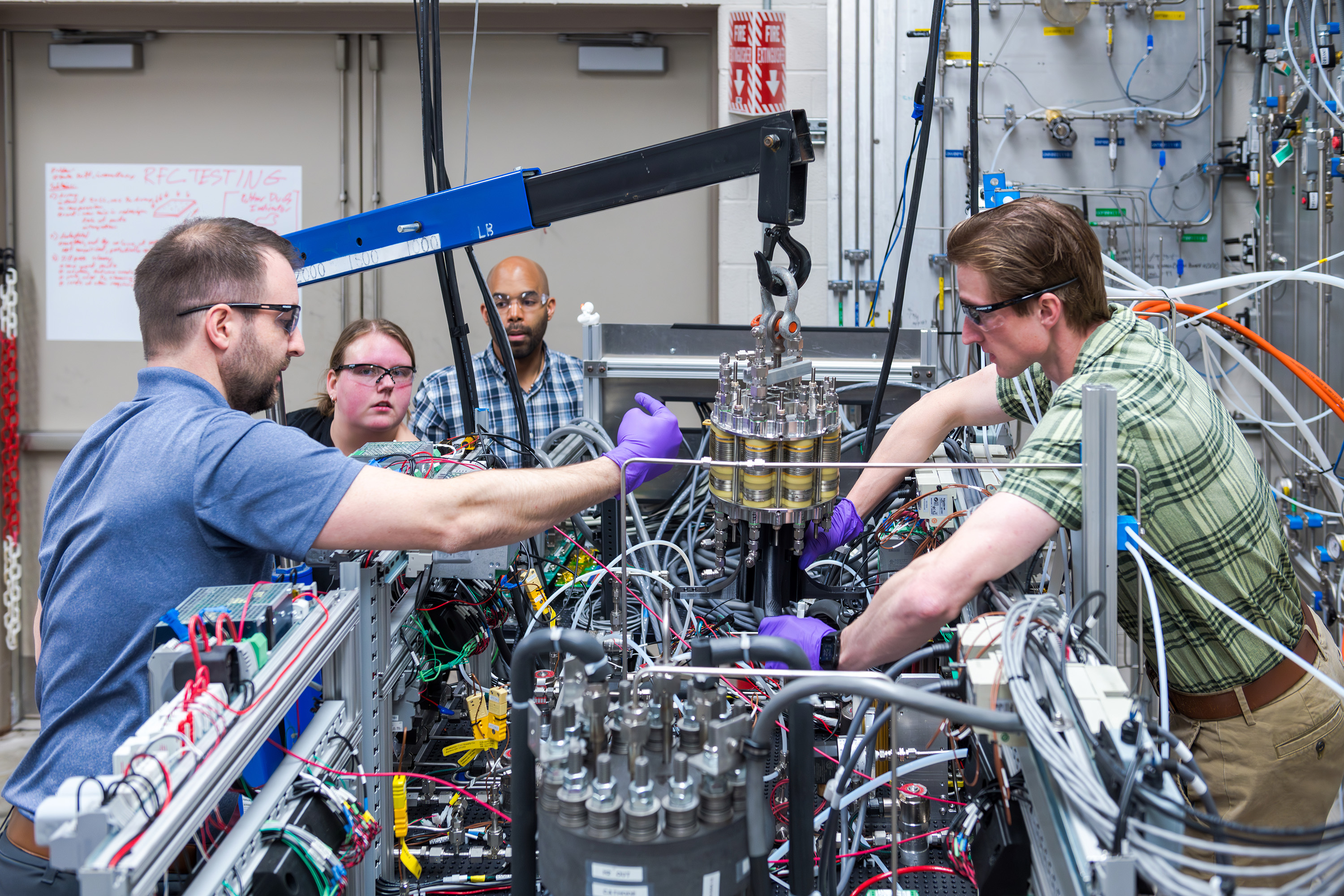
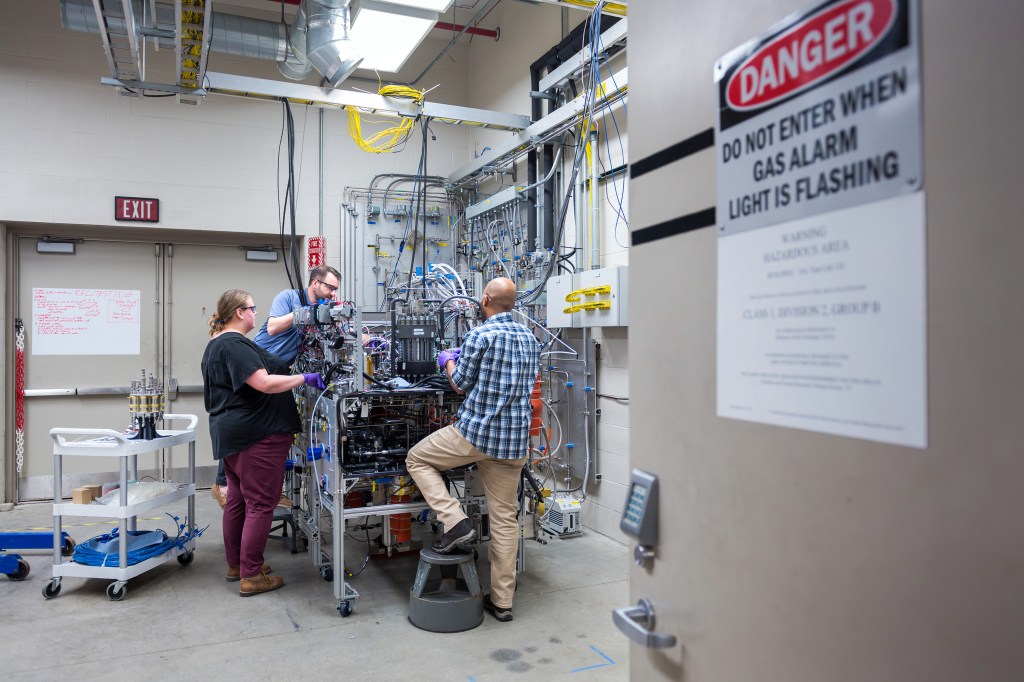
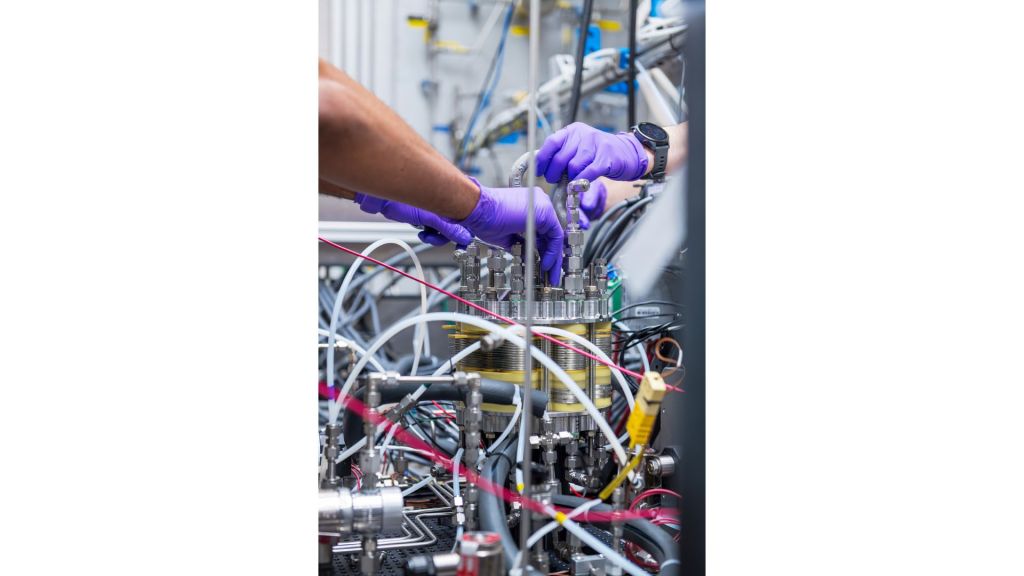
With a small blue crane, four researchers hoist a cylindrical fuel cell, which looks like a stack of flattened silver and gold soda cans bundled together, into the air and lower it into a rectangular cart on wheels. A tangle of tubes and wires spiral away from the system, where nearly 270 sensors and 1,000 […]
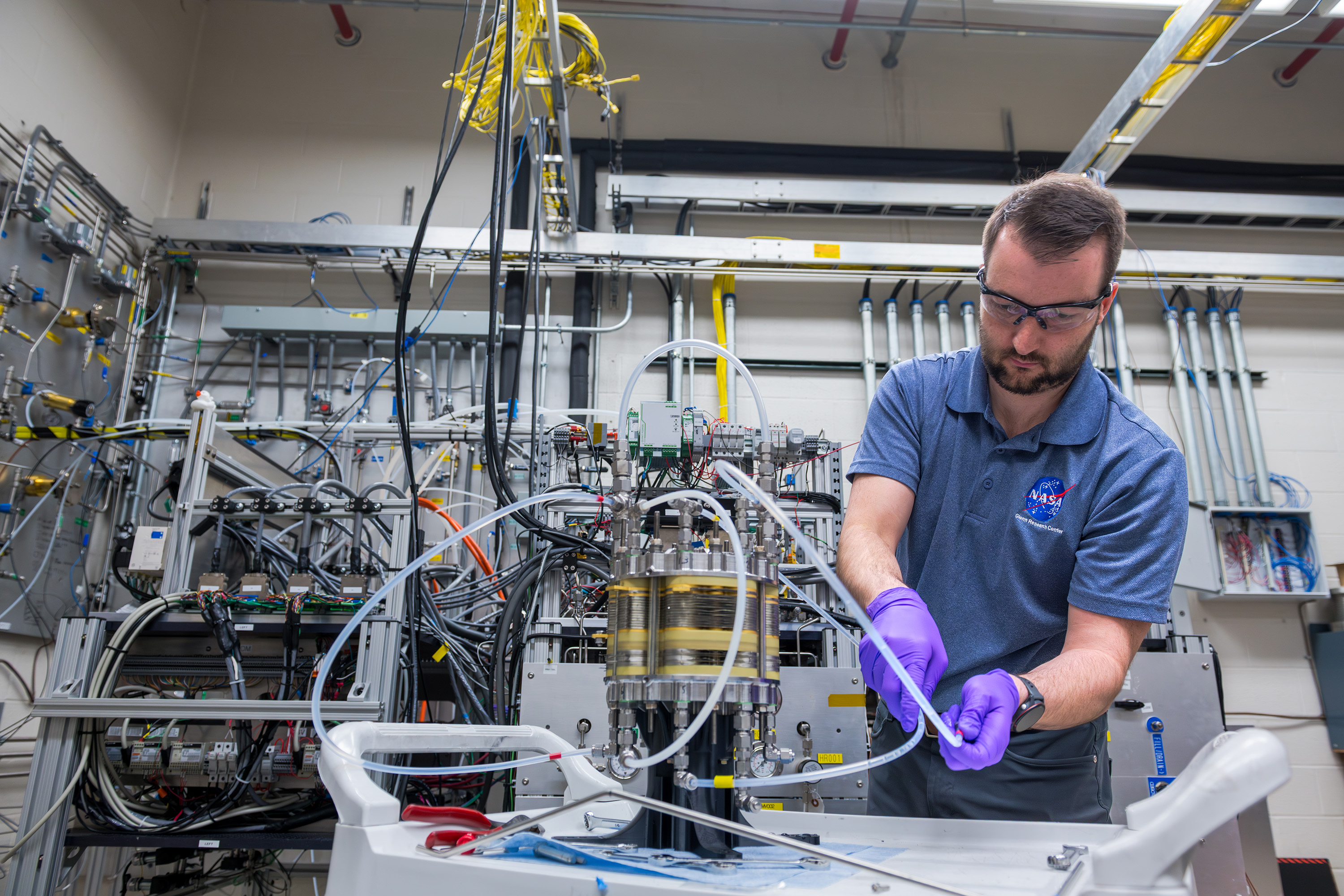
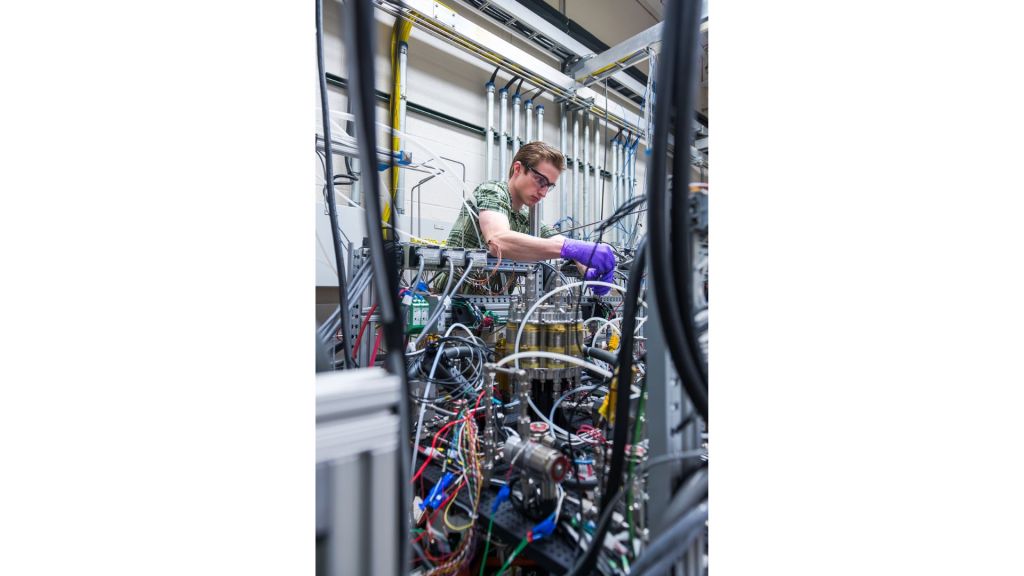
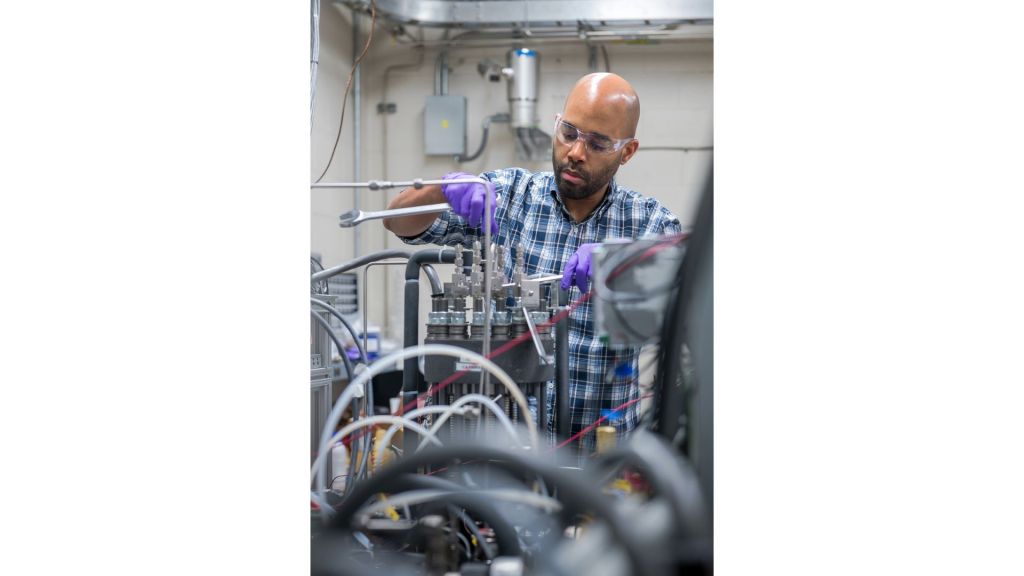
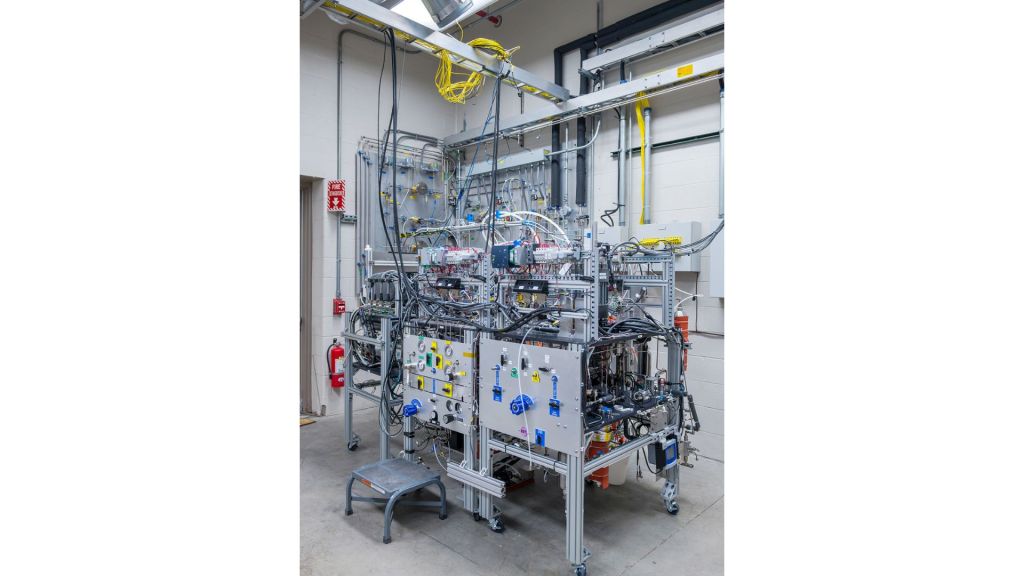
With a small blue crane, four researchers hoist a cylindrical fuel cell, which looks like a stack of flattened silver and gold soda cans bundled together, into the air and lower it into a rectangular cart on wheels. A tangle of tubes and wires spiral away from the system, where nearly 270 sensors and 1,000 components are nestled inside.
“It’s a behemoth; it’s a researcher’s dream,” said Dr. Kerrigan Cain, lead engineer for the team at NASA’s Glenn Research Center in Cleveland preparing to test this technology, known as a regenerative fuel cell system, over the next few months.
The system, about as long as a sedan and as tall as a person, operates like a rechargeable battery and could revolutionize the way NASA stores energy during future Moon missions through the Artemis program. When power is needed, it’s designed to combine hydrogen and oxygen gas into water, heat, and electricity, and then “recharge” by splitting the water back into hydrogen and oxygen — all on the lunar surface.
“It is an ideal technology for habitats, exploration with rovers, and many of the systems that are envisioned under Artemis,” Cain said. “Developing a sustainable, long-term human presence on the Moon requires power and energy storage solutions that fit those needs. Regenerative fuel cells fit into that puzzle perfectly.”
This technology can weigh less but store the same amount of energy as comparable battery systems and could even operate during cold, dark, nearly two-week-long lunar nights. Its recharging capability also would ensure astronauts make the most of their resources and energy on the lunar surface without needing new supplies delivered from Earth.
The upcoming tests are the culmination of over five years of work. The system was designed and assembled at NASA Glenn. Researchers completed initial testing in 2025 to understand the basics of how the technology functions and make modifications.
Now, the team is passing a major milestone as they get ready to operate the complete system, storing the hydrogen and oxygen gas generated during recharge for the first time. They hope to gather essential data, identify any additional challenges, and further advance the technology toward a lunar mission.
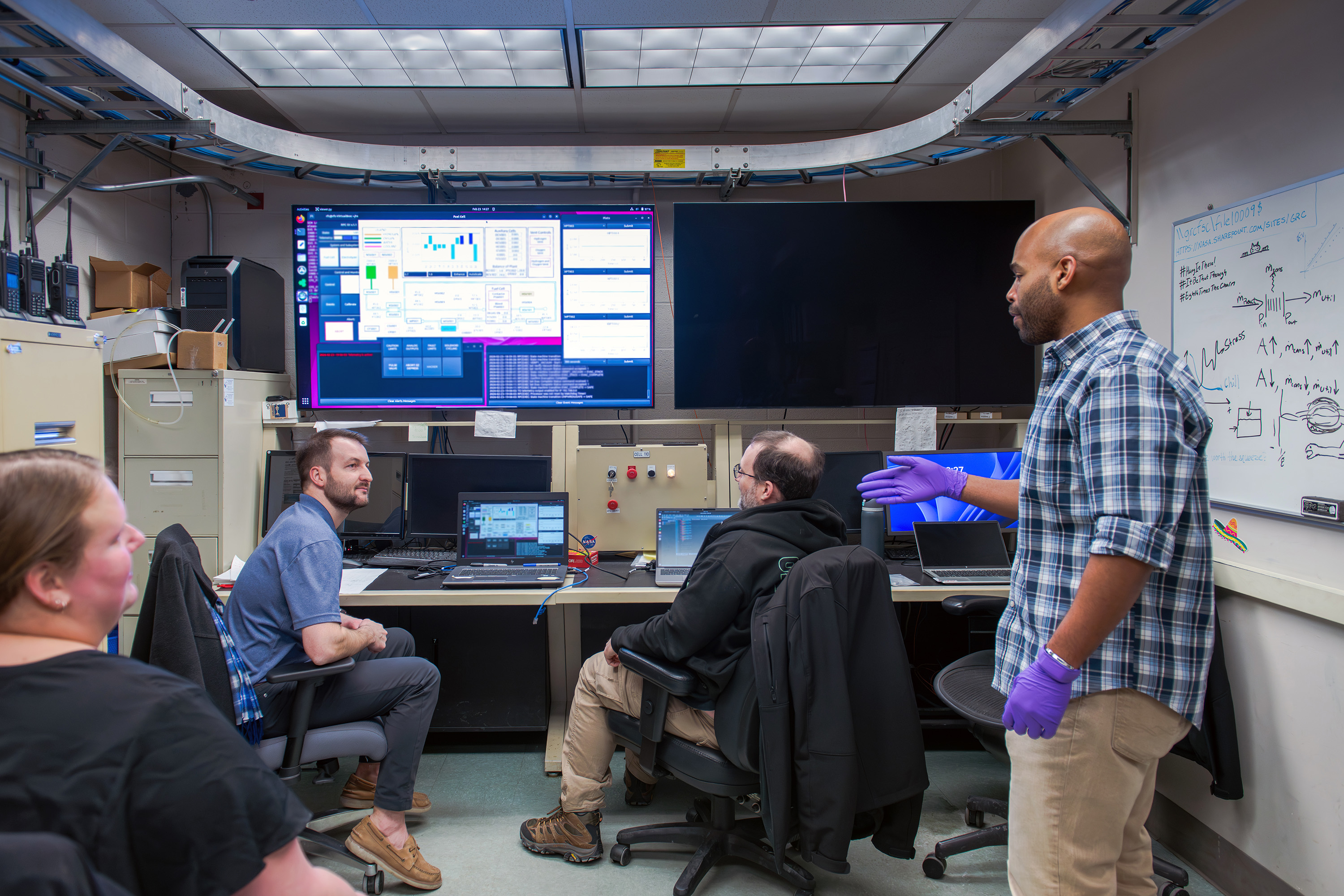
On an average test day, researchers will secure the thick double doors to the test cell where the system is located in NASA Glenn’s Fuel Cell Testing Laboratory, head to a nearby control room, and begin to run the system remotely. Once it is powered up and a test has started, the technology can operate on its own without researcher intervention.
“This testing is going to generate crucial data, so every day is exciting,” Cain said. “This effort was made possible by countless hours of work. The desire for fuel cell technology is so high, it makes it very easy to get up every morning and go, ‘All right, we have to keep moving forward so that we can be ready for Artemis.’”
Researchers will use lessons learned from testing to continue advancing regenerative fuel cell technology. Before the system can launch to the Moon, researchers will put it through its paces outside of the lab.
“We want to simulate being on the lunar surface and prove the system can work under much harsher conditions compared to a controlled laboratory environment,” Cain said.
Cain and his team noted working on the complex regenerative fuel cell system is both rewarding and challenging as they consider the impacts their research could have on NASA’s future deep space missions.
“Creating a sustainable presence on the Moon is a team effort requiring a lot of collaboration between NASA and industry,” Cain said.
NASA’s Regenerative Fuel Cell project is funded by the Space Technology Mission Directorate’s Game Changing Development Program, managed at NASA’s Langley Research Center in Hampton, Virginia.
What's Your Reaction?