
















NASA Laser Terminal Enhances Views During Artemis II Mission
Millions of people watched the historic launch of Artemis II and were captivated by the mission’s 10-day journey around the Moon as NASA astronauts Reid Wiseman, Victor Glover, and Christina Koch, and CSA (Canadian Space Agency) astronaut Jeremy Hansen ventured farther into space than any human before. Part of the public’s ability to experience the […]

Millions of people watched the historic launch of Artemis II and were captivated by the mission’s 10-day journey around the Moon as NASA astronauts Reid Wiseman, Victor Glover, and Christina Koch, and CSA (Canadian Space Agency) astronaut Jeremy Hansen ventured farther into space than any human before. Part of the public’s ability to experience the mission in high-definition was due to laser communications.
Laser, or optical, communications systems use invisible infrared light to transmit more data in a single downlink than traditional radio frequency systems. During Artemis II, NASA tested an optical communications system to demonstrate the benefits laser communications can bring to future human spaceflight missions to the Moon.
The optical terminal, a payload attached to the Orion spacecraft’s exterior, marked the first time laser communications supported a crewed mission at lunar distance. The terminal collected and transmitted high-definition video, flight procedures, photos, engineering and science data, and voice communications to Earth over laser signals when the spacecraft had line of sight with ground terminals.

“Access to high-resolution imagery and other scientific data during dynamic science mission phases is a game changer,” said Dr. Kelsey Young, Artemis II lunar science lead. “It means faster insights, better science decision-making to support the crew as they’re completing science exploration, and a mission with a more integrated science presence. It felt like we were right there with the crew, and it maximized the lunar science impact of the mission as it allowed for a more productive crew science conference the morning after the flyby.”
Access to high-resolution imagery and other scientific data during dynamic science mission phases is a game changer."
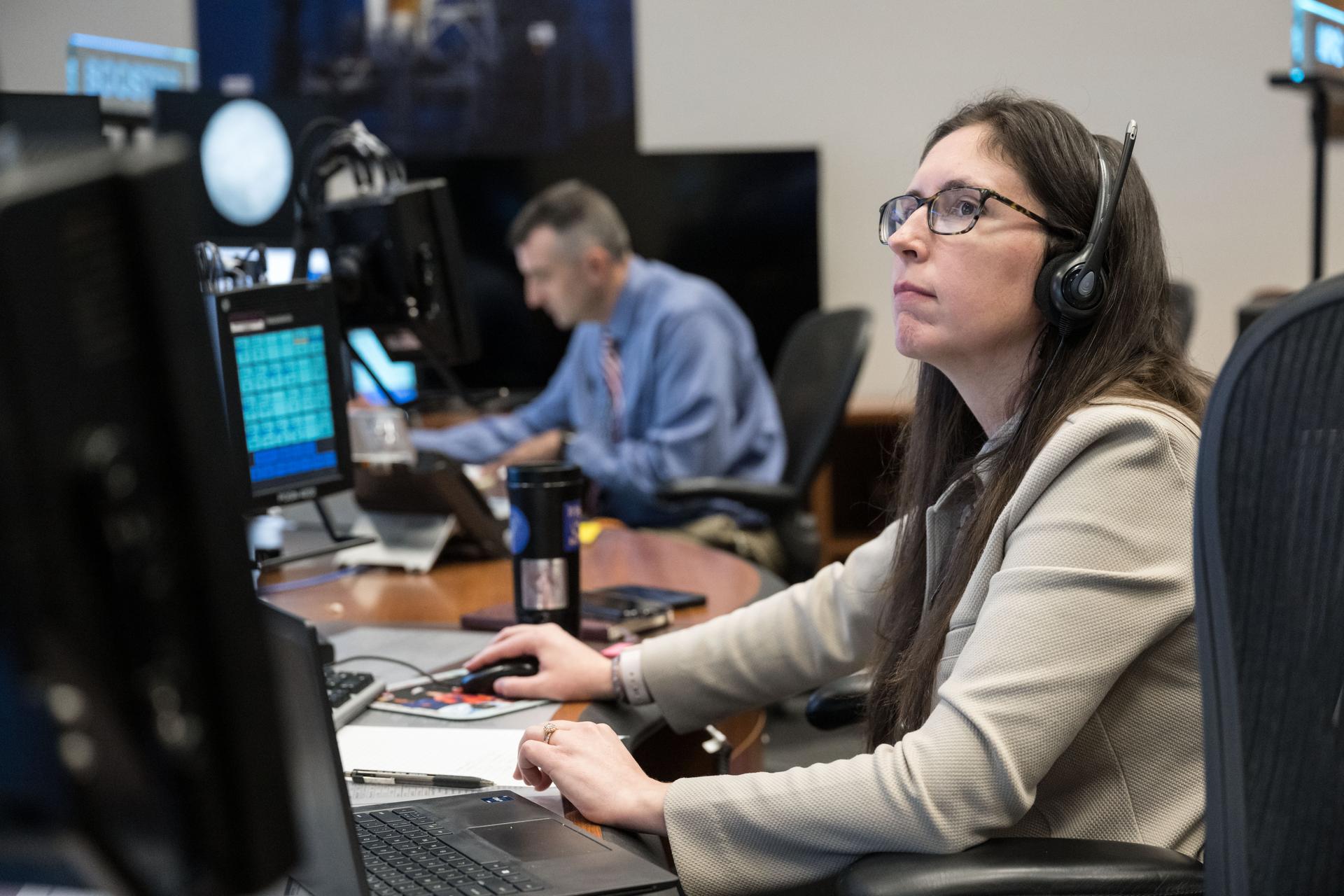
Dr. Kelsey young
Artemis II Lunar Science Lead
During the about 10-day journey, the laser communications system exchanged 484 gigabytes of data between Orion and Earth, roughly equivalent to 100 high-definition movies compared to the capacity of standard radio frequency systems. The crisp, clear photos of Earthset, Earthrise, and many of the other mission images were downlinked over the Orion Artemis II optical communication system’s laser links. The terminal also was able to transmit data to the Orion capsule, delivering information to the crew.
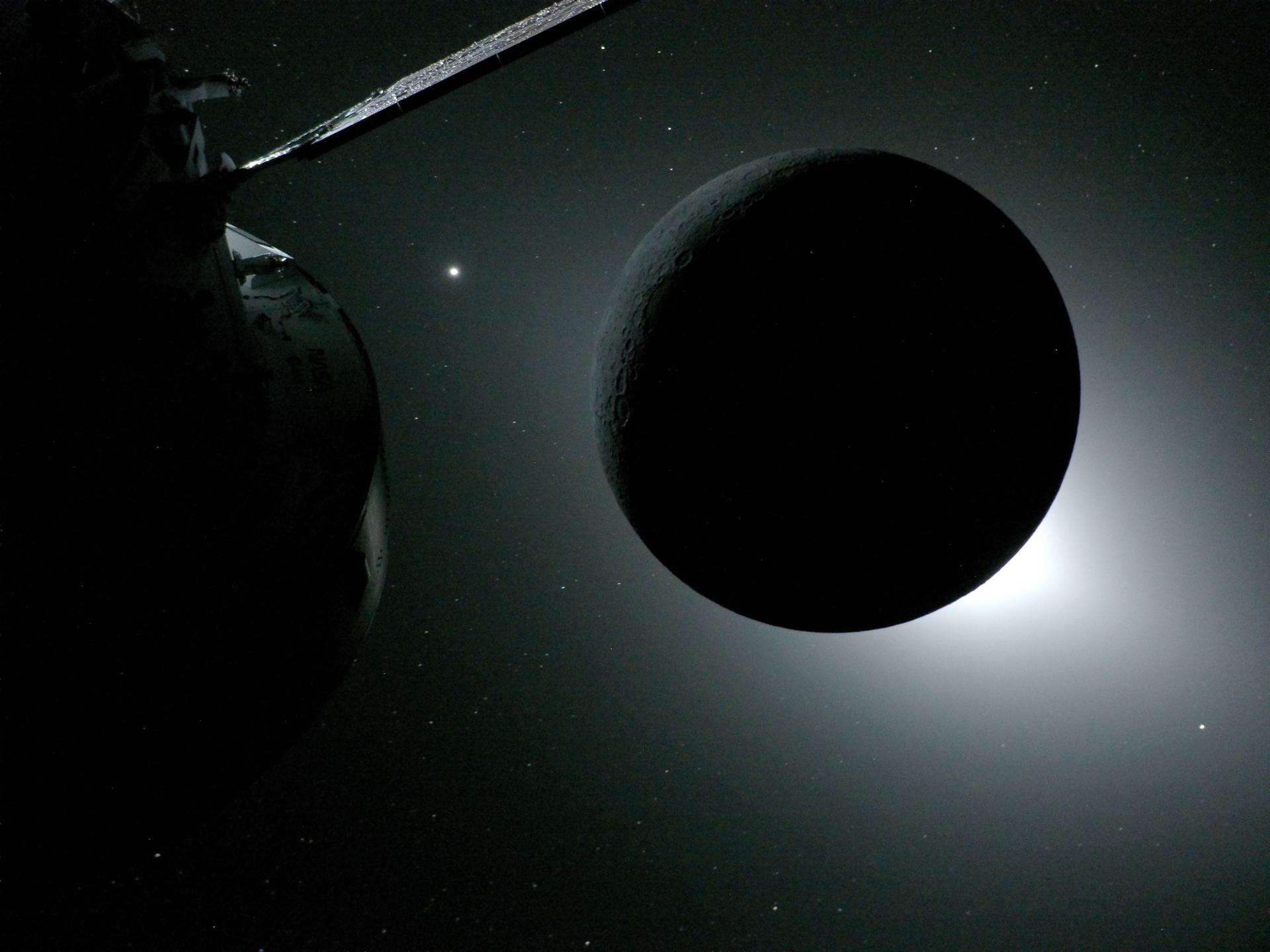
Artemis II’s primary communications support came from the Near Space Network and Deep Space Network, NASA’s traditional radio frequency systems. At lunar distances, with the current processing structure, these systems were limited to single-digit data rates in the megabits per second range. When the optical system was in use, the Orion crew module established multiple 260 megabits per second downlinks, surpassing many of its demonstration goals.
On Earth, NASA ground station telescopes at the NASA’s Jet Propulsion Laboratory in Southern California and White Sands Complex in New Mexico were selected for their high-altitude, dry environments to ensure a strong link between Earth and the optical terminal aboard Orion. These stations collected the bulk of Orion’s optical signals, hitting a record of 26 gigabytes of data received, downloaded, and transmitted to mission control in under an hour – enabling faster data transfer than most home internet capabilities.
In addition to NASA’s two main ground stations, Orion also downlinked data to a newly developed site at the Australian National University Quantum Optical Ground Station at Mount Stromlo in Canberra, Australia. After several years of technical support, subject matter experts from NASA’s Glenn Research Center in Cleveland and the agency’s Goddard Space Flight Center in Greenbelt, Maryland, worked with the university to build and demonstrate a lunar-capable optical telescope leveraging affordable parts developed by commercial industry.
Throughout the mission, the Australian site achieved dual-stream video with Orion for more than 15.5 hours, contributing to a live streaming view from Orion, which enabled millions of viewers to follow the mission. The ground station successfully downlinked the terminal’s highest possible data rate of 260 megabits per second, proving that commercial, off-the-shelf parts can be leveraged to decrease the cost, time, and difficulty required to assemble optical ground stations.
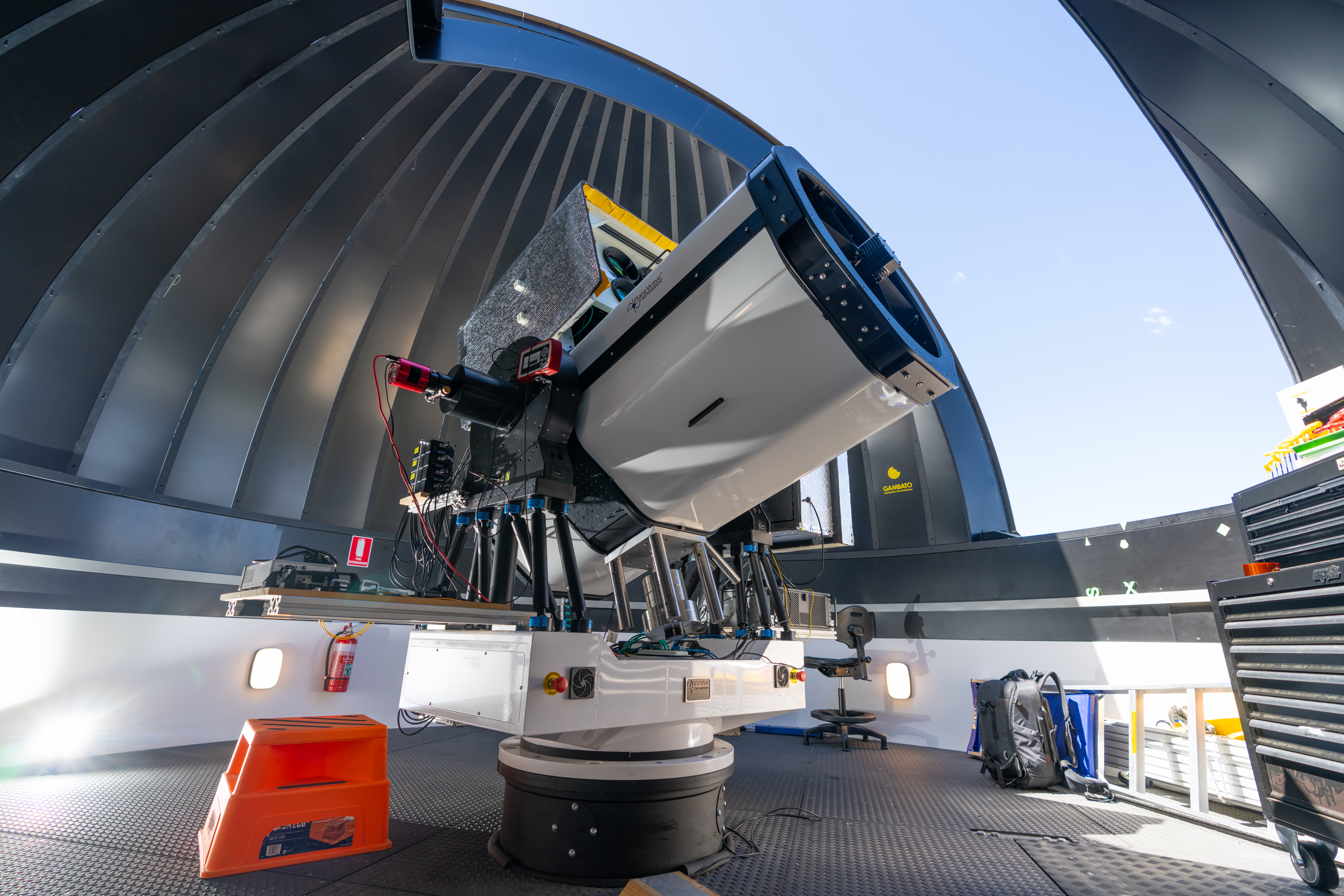
Throughout the mission, the Australian site achieved dual-stream video with Orion for more than 15.5 hours, contributing to NASA’s “Live Views from Orion” feed, which enabled millions of viewers to follow Artemis II milestones. The ground station successfully downlinked the terminal’s highest possible data rate of 260 megabits per seconds, proving that commercial, off-the-shelf parts can be leveraged to decrease the cost, time, and difficulty required to assemble optical ground stations.
Space communications isn’t just about moving bytes, it’s about delivering the images, the video, and the voices of the crew that bring a mission to life.

Greg Heckler
SCaN Deputy Program Manager for Capability Development
“Space communications isn’t just about moving bytes, it’s about delivering the images, the video, and the voices of the crew that bring a mission to life,” said Greg Heckler, SCaN’s deputy program manager for capability development. “With the optical payload, we were able to watch astronauts embark on their journey in near real-time. Those moments gave us a breathtaking new view of Earth and revealed the crew isn’t just a team, but a family.”
As NASA pushes the boundaries of human exploration, the successful use of laser communications demonstrated faster data transfer, offering a glimpse into options for future agency missions.
Under Artemis, NASA will send astronauts on increasingly difficult missions to explore more of the Moon for scientific discovery and economic benefits, building the foundation for the first crewed missions to Mars.
Learn more about the Artemis II mission:
https://www.nasa.gov/artemis-ii
Share
Details
Related Terms
Explore More

What's Your Reaction?