

















‘Remarkable’ discovery upends our understanding of how brains store memories
Memories in mice persisted even after they lost the connections that we thought were needed for recall, expanding our knowledge of memory in the mammalian brain

Our memories may persist even when half of the brain connections that store them are wiped out, according to a study in dormant mice. The “remarkable” discovery tells us more about how memory works and could one day reveal ways to improve it.
“Memories may be harder to break than we thought,” says Steve Ramirez at Boston University, who wasn’t involved in the study. “This absolutely, substantially advances our understanding of how memory works.”
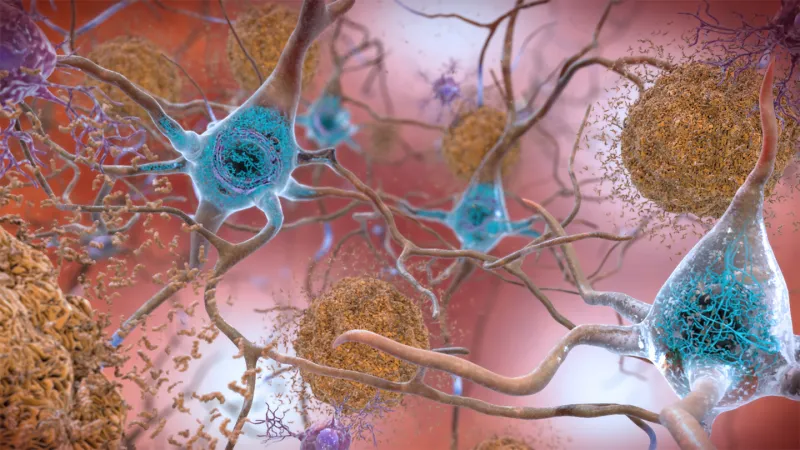
When we experience a stimulus, neurons in our sensory organs, like our eyes, transmit electrical signals to our brain. Neurons then process this information by firing electrical signals to each other via junctions called synapses.
Advertisement
These neurons, called engram neurons, encode information into a memory by forming new synapses and strengthening existing ones. Recalling a memory further bolsters these connections and our memory.
Many scientists think a memory persists as long as the specific pattern of synapses on the engram neurons encoding that memory is maintained. This is partly based on experiments that have used drugs or genetic tools to disrupt synapses on engram neurons, says Kazumasa Tanaka at the Okinawa Institute of Science and Technology in Japan.

But recent studies suggest a memory persists even when these synapses are altered in location or number. This has called into question “what’s necessary and sufficient to have a memory preserved”, says George Dragoi at Yale University.
To address this, Tanaka and his colleagues took inspiration from hibernating animals. “Under hibernation, brain activity seems to drop significantly,” he says. “But studies in natural hibernators show that somehow those animals, after arousal in the spring, seem to remember their friends and the location of food they hid before hibernation.”
By examining how memory is retained during hibernation, a situation in which the brain changes dramatically, the researchers hoped to unpick basic principles by which the mammalian brain stores memories long term. “The [researchers] very cleverly and creatively get at the question of memory by using hibernation as a way to poke and prod at the brain,” says Ramirez.
They applied weak electric shocks to the feet of mice – which don’t naturally hibernate – while they were in a chamber that smelled of alcohol, creating a fearful memory associated with that scent. The next day, the mice froze in fear upon being placed in the same chamber, without receiving shocks.
The researchers induced an artificial state of hibernation in about half the mice for two days. This was done by injecting them with drugs that slow metabolism and placing them in a dark chamber.

Five days later, mice that had artificially hibernated still froze when placed in the alcohol-smelling chamber. This was despite brain scans revealing that more than half of the synapses within the engram neurons in their hippocampus – a brain region crucial for memory – disappeared during hibernation. “Despite massive brain remodelling during hibernation, the memories were retained,” says Tanaka.
Dragoi says the findings are relevant to people, since prior research has shown that our brains store information very similarly to mice. “It tells us something about how our mammalian brains may work,” says Ramirez.
The team also found that the hibernating rodents’ brains retained synapses that clustered closely together on the surface of engram neurons, while those outside these clusters disappeared. This suggests that clustered synapses specifically are crucial for retaining memory in the brain, says Tanaka.
Non-clustered synapses that were wiped out by hibernation reappeared within a day post-hibernation, indicating that, while clustered engram synapses are necessary to retain the information within memories, the non-clustered synapses may be important for accessing memories, he says.

“This study is a remarkable step forward because it addresses a long-standing puzzle in memory research: how the brain retains long-term memories,” says Priyanka Rao-Ruiz at Vrije University Amsterdam in the Netherlands.
The team is exploring the molecular pathways through which clustered engram synapses store information and plans to dig into how non-clustered ones reappear, says Tanaka.
Targeting such pathways with drugs could even reveal ways to prevent or slow memory impairment, says Ramirez. “It gives hope that even in instances where information seems to be lost in the brain, whether it’s amnesia or Alzheimer’s disease, memory may nonetheless persist.”
Science DOI: 10.1126/science.aee7004
What's Your Reaction?