










The 12 strangest science stories we can’t stop thinking about
From subconscious finger sniffing to rats driving cars, New Scientist staff have reported on many weird, wild or utterly bonkers discoveries and inventions in the 70 years since we began

There are some stories that stay with you forever, the big scientific moments that change the course of history. These are not those moments – but we can’t stop thinking about them anyway.
Push my button
Surgeon Stuart Meloy was performing a pain-relief operation on a woman’s spine when she started exclaiming emphatically. “You’re going to have to teach my husband to do that,” the woman said. This inspired Meloy to invent an implant to help women who are unable to achieve orgasms in the usual way. New Scientist broke the news in 2001, sparking a frenzy of worldwide media excitement. But 13 years later, Meloy was still struggling to raise funds for a full clinical trial, and the “orgasmatron” never reached a climax.
Monkey pleasure

We aren’t the only primates capable of coming up with creative ways to pleasure ourselves. In a study of long-tailed macaques (Macaca fascicularis) in Bali, Indonesia, Camilla Cenni at the University of Lethbridge in Alberta, Canada, and her colleagues filmed hundreds of examples of male and female monkeys using stone tools as sex toys, rubbing or tapping them on their genitals. According to Cyril Grueter at the University of Western Australia, the Balinese monkeys get plenty of food handouts from humans, and this frees up time for sexual experimentation. But some monkeys in other places have unusual kinks, too: another study reported a wild macaque in Japan rubbing its genitals on the back of a sika deer.
Advertisement
Head transplants
In 2015, surgeon Sergio Canavero announced plans to carry out the first human head transplant, intended to extend the lives of people with muscle and nerve degeneration or widespread cancer. He claimed his technique could overcome technical hurdles, including how to fuse the spinal cord and prevent the body’s immune system from rejecting the head. In the following two years, Canavero published animal experiments supposedly backing up his methods, but other surgeons remained highly sceptical. A human head transplant never did happen, but Canavero has reportedly moved on to an even bolder ambition: transplanting a brain into a non-sentient clone.
Rats driving
Have you ever wondered if a rat can drive a car? Kelly Lambert at the University of Richmond in Virginia has. She and her colleagues built a tiny car with three copper bars that would steer it left, forward or right. Sure enough, 18 rats learned to drive towards food rewards. They even found it relaxing, as measurements of their stress hormones indicated. Lambert proposed that driving challenges could replace traditional maze tests when using rat models to study neuropsychiatric conditions.
The sniff test
Humans are more similar to rats than we like to think. In a psychology experiment, Noam Sobel and his colleagues at the Weizmann Institute of Science in Rehovot, Israel, surreptitiously filmed 153 volunteers. After shaking hands with someone of the same sex, people smelled their shaking hand more than twice as much as they did before the handshake. Puzzlingly, after shaking hands with someone of the opposite sex, people were more likely to sniff their non-shaking hand. The team suspected that humans use chemical signals all the time without being aware of it.
Urine fountains

Communication through scent is, of course, widespread in mammals, but some never-before-seen behaviour in dolphins took biologists by surprise in 2025. While studying Amazon river dolphins (Inia geoffrensis), or botos, in Brazil, Claryana Araújo-Wang at CetAsia Research Group in Ontario, Canada, saw a male “flip his belly up out of the water, expose his penis and then proceed to urinate into the air”, she told New Scientist. They saw dolphins do this a total of 36 times, and most of the time another male was nearby and would pursue the stream of urine. The purpose of this behaviour hasn’t yet been established, but hormones in urine might signal a male’s social position or physical condition, said Araújo-Wang.
Giving the finger
As for human modes of communication, many of us struggle to put our smartphones down – so the last thing we’d want is for them to crawl across the table towards us. Nevertheless, Marc Teyssier at the University of Paris-Saclay in France and his colleagues gave phones this ability in 2018, with a robotic appendage dubbed the MobiLimb. It plugs into a device’s USB port and, for some reason, looks eerily like a human finger, giving it a spooky quality reminiscent of Thing from The Addams Family. The MobiLimb can stroke your wrist, wave, wag like a tail or, most disconcertingly, drag the phone around. Thankfully, the idea hasn’t taken off.
Horror frog

If you find the thought of a phone with a finger horrifying, wait until you hear about the nightmare-inducing hairy frog Trichobatrachus robustus. In 2008, researchers reported that these frogs can break their own bones to produce claws that burst through their skin. David Blackburn at Harvard University’s Museum of Comparative Zoology thought these weapons were for defence, but two years later, another team argued that they were used in fights between males – and that the frog’s unusual hairs were a kind of armour to protect its vulnerable parts from sharp claws.
Corpse shrinking
In 1957, when New Scientist was 1 year old, we reported on a new method for shrinking an adult human body to the size of a baby. At an exhibition of inventors in Winnipeg, Canada, the unnamed inventor of this process claimed it would make disposing of dead bodies simpler, as they could be slid into underground tubes and take up less space. The method involved applying high pressure to the corpse and squeezing out fluids so its flesh could be compressed into a mould. “All this is, of course, highly ingenious but it is uncertain why the inventor thinks that his newly proposed form of burial is in any way better than the current and very popular method of cremation,” the writer mused.
Transient anus
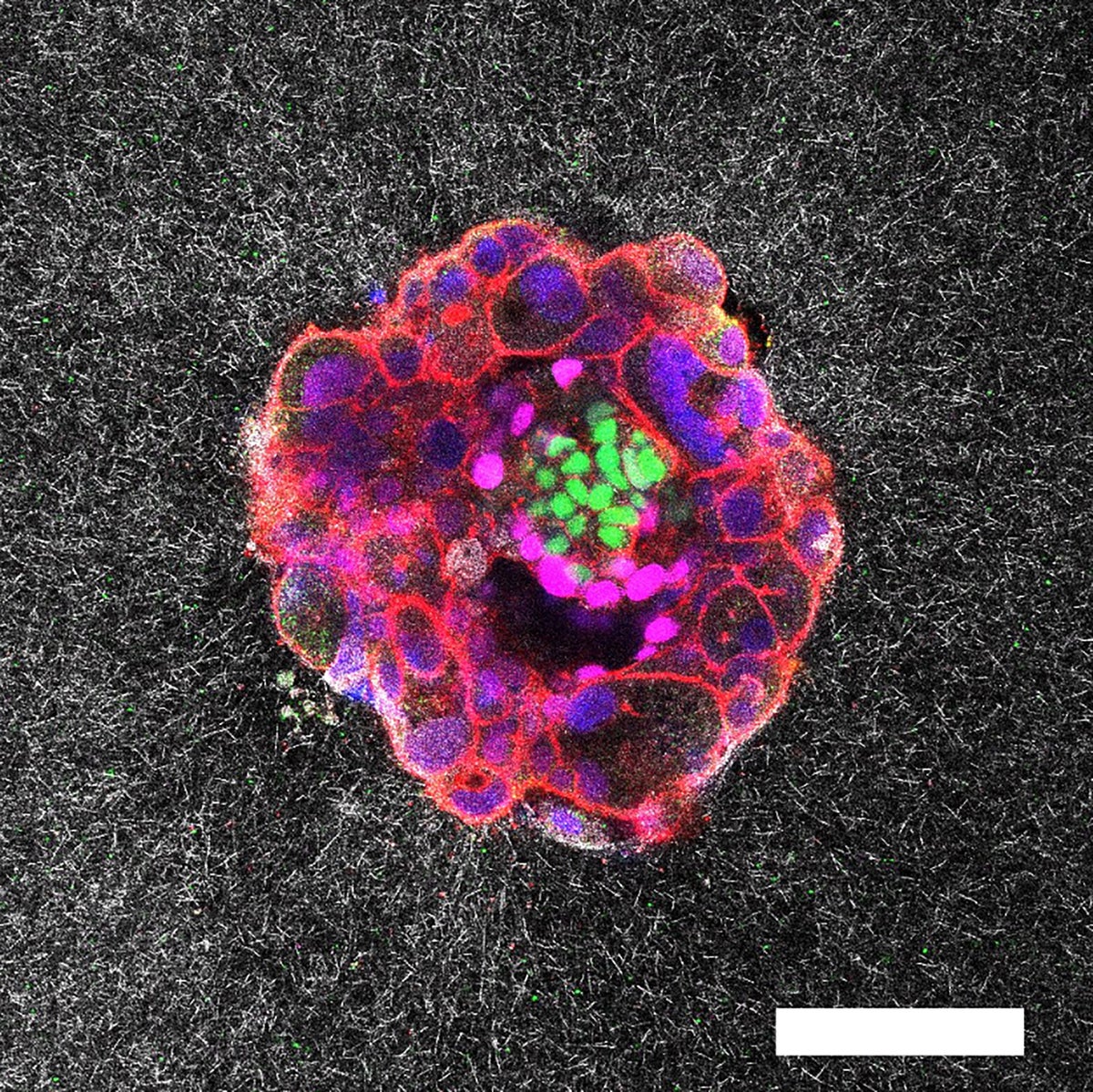
We may take it for granted, but the anus, which allows food to pass through the body, was an evolutionary breakthrough, both figuratively and literally. The earliest animals, like jellyfish today, had only one gut opening, where food went in and waste came out. In 2019, scientists discovered that the warty comb jelly (Mnemiopsis leidyi, pictured top) forms an anal opening when it needs to defecate, but it vanishes straight afterwards. This, they suggested, could represent how the anus evolved in the first place.
Fart science
Flatus – gas expelled from the anus – has been a topic of endless fascination for many readers (and journalists). In 2001, we featured the work of Michael Levitt at the Veterans Administration Medical Center in Minneapolis, a leading authority on the subject. He developed a “Toot Trapper” that reduces odours by trapping certain gases using activated charcoal. We also reported on a device for monitoring gas emissions from dogs, used to test dog snacks that were supposed to reduce flatulence. In 2016, researchers in Australia worked out which foods cause the smelliest farts by mixing faeces with different foods. They recommended eating less protein and more slow-release carbohydrates to minimise hydrogen sulphide production. In 2022, Nagarajan Kannan at the Mayo Clinic in Rochester, Minnesota, and his colleagues worked out that some poos float because of gas from gut microbes, confirming a hypothesis first put forward by Levitt 50 years earlier.
Brew your own
Even stranger things go on inside some people’s intestines, as we found out in 2019. A 46-year-old man started experiencing unexplained mental fogginess, dizziness and memory loss, and had to give up his job. Later, doctors found high levels of alcohol in his blood when he hadn’t been drinking. Eventually, they realised his gut contained high levels of Saccharomyces cerevisiae – brewer’s yeast – which got him drunk any time he ate a lot of carbohydrates. This rare condition, known as auto brewery syndrome, had been triggered when the man took antibiotics for a thumb injury, which disrupted his gut microbiome. This year, a study reported that another man with this condition fully recovered after getting a transplant of faeces from a healthy donor. Both articles were written by Alice Klein, who we also have to thank for the monkey sex toys, car-driving rats, smelly farts and floating poos. Thanks, Alice!
What's Your Reaction?