












To Protect Artemis II Astronauts, NASA Experts Keep Eyes on Sun
As four astronauts travel around the Moon on NASA’s Artemis II mission, they will venture beyond Earth’s protective magnetic field. The crew’s spacecraft, Orion, will carry and protect them as they journey into deep space and serves as the main protection against the Sun’s intense power. During their 10-day flight, NASA and the National Oceanic and Atmospheric Administration (NOAA) will monitor the […]
7 min read
To Protect Artemis II Astronauts, NASA Experts Keep Eyes on Sun
As four astronauts travel around the Moon on NASA’s Artemis II mission, they will venture beyond Earth’s protective magnetic field. The crew’s spacecraft, Orion, will carry and protect them as they journey into deep space and serves as the main protection against the Sun’s intense power. During their 10-day flight, NASA and the National Oceanic and Atmospheric Administration (NOAA) will monitor the Sun around the clock and translate space weather conditions into real-time decisions to protect the astronauts.
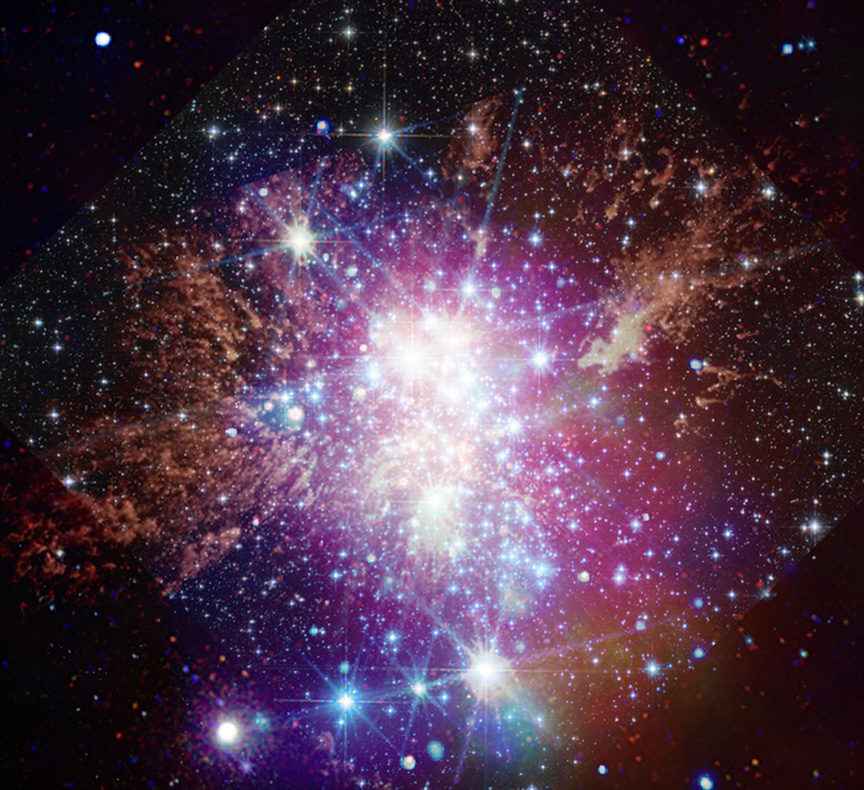
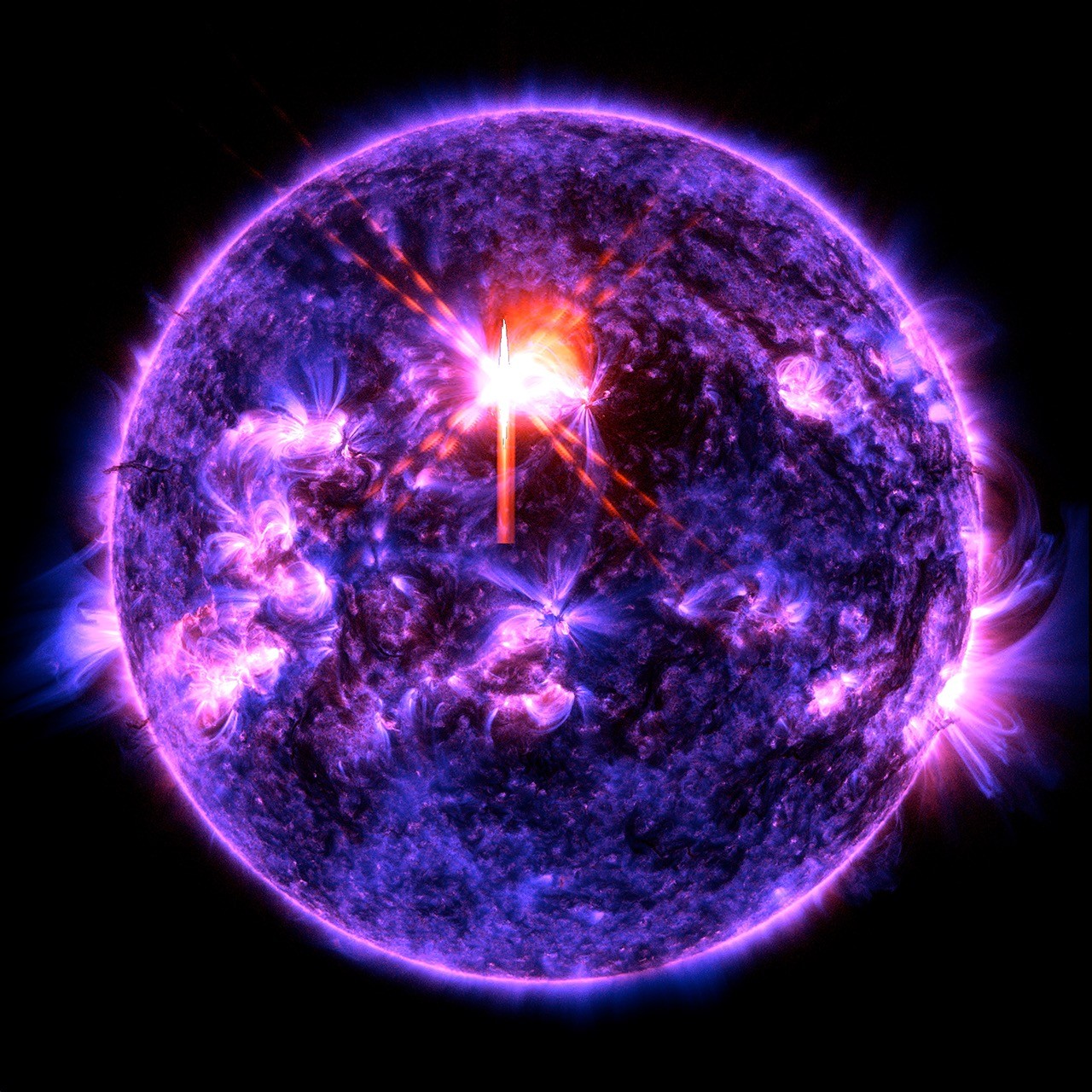
Space weather refers to the changing conditions driven by solar wind and eruptions from the Sun. Solar flares are the most powerful eruptions in the solar system, the strongest unleashing more energy than a billion hydrogen bombs. Coronal mass ejections are giant clouds of solar particles hundreds of times the size of Earth that burst from the Sun.
While both flares and coronal mass ejections can affect technology, the primary concern for astronauts is the solar particle events they can trigger, accelerating some particles to near light speed. If a significant solar particle event occurs near the Artemis II crew, it could raise radiation levels inside the spacecraft. Too high a total lifetime exposure can contribute to increased risks of developing cancer or health disorders that could impair cognition and performance. During the Artemis II mission, NASA will minimize that risk.
NASA/Joy Ng
Tracking solar eruptions
“Our focus will be real-time space weather analysis, prioritizing solar energetic particles and events that could produce them,” said Mary Aronne, operations lead for the space weather analysis office at NASA’s Goddard Space Flight Center in Greenbelt, Maryland. “We’re looking for the trigger, which would typically be a flare or a coronal mass ejection.”
The Goddard team will track any solar eruptions that occur, measuring how big they are, how fast they’re moving, and how likely they are to generate energetic particles that will cross Orion’s path. To this end, they’ll use real-time data from Sun-watching spacecraft strategically placed across the solar system, such as NASA’s recently launched Interstellar Mapping and Acceleration Probe, NASA’s Solar Dynamics Observatory, the ESA (European Space Agency)/NASA Solar and Heliospheric Observatory, NOAA’s Geostationary Operational Environmental Satellites-19 satellite, and many others.
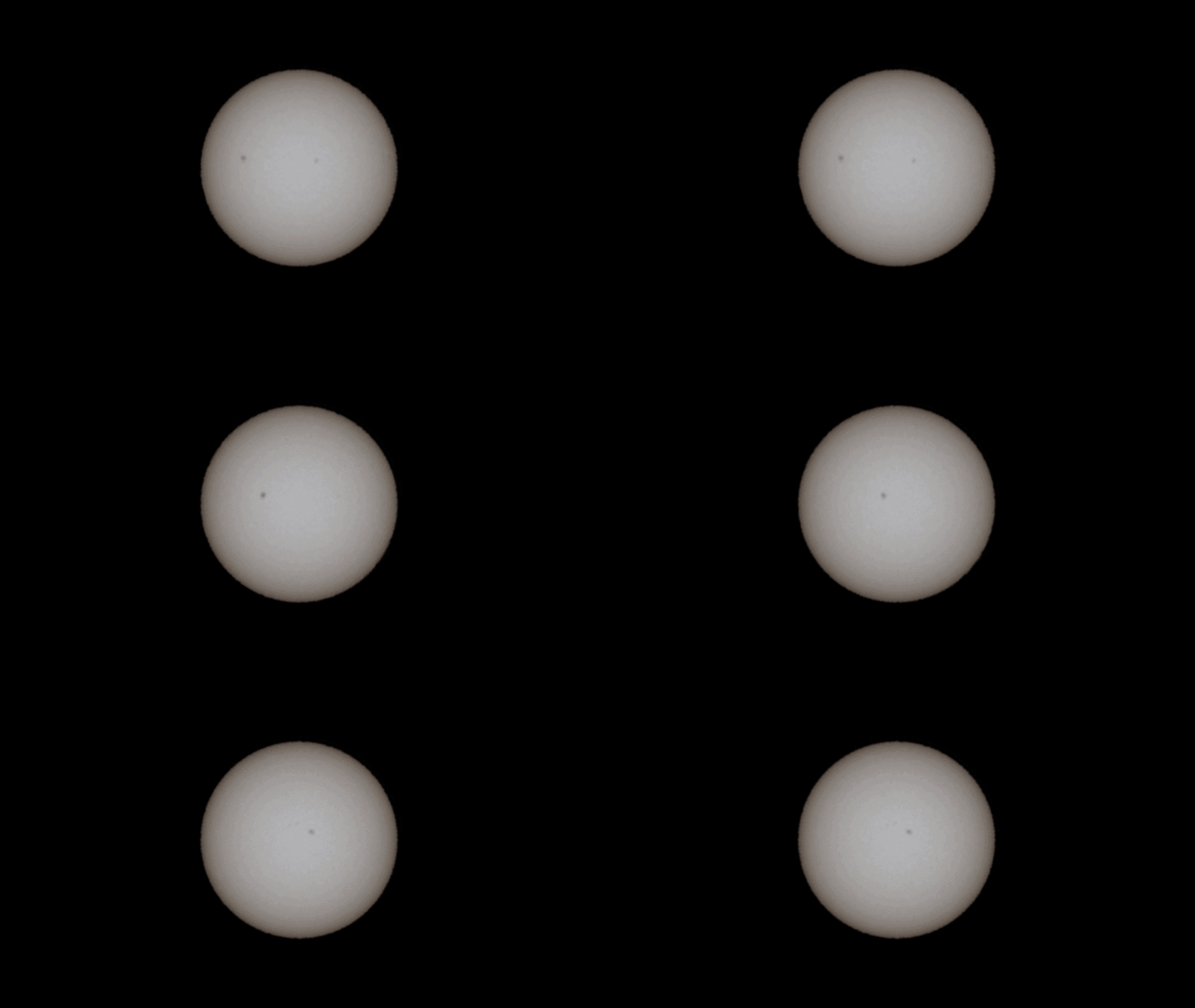
Other NASA spacecraft also will help monitor the Sun. Due to Mars’ current position, NASA’s Perseverance Mars rover can look at the far side of the Sun, where Earth has no view. The rover’s Mastcam-Z cameras can give NASA’s space weather teams a view of the largest sunspots up to two weeks earlier so the team can monitor and prepare for possible solar flares.
Monitoring crew exposure
Energetic solar particles don’t stream straight out from the Sun. They spiral along the Sun’s magnetic field lines, tracing loops tens of thousands of miles across and scattering due to particle collisions along the way. The chaotic swarm is so large that, from inside it, particles seem to be coming from every direction.
“It’s more like you’re sitting in a bathtub and it’s gradually filling with water,” said Stuart George, a space radiation analyst at NASA Johnson.
That gradual rise in radiation gives analysts time to evaluate the situation. Inside Orion, six radiation sensors, part of the Hybrid Electronic Radiation Assessor system designed and built by NASA, measure dose rates in different parts of the cabin. Artemis II astronauts also wear personal radiation trackers called crew active dosimeters. If radiation levels increase, Orion’s onboard systems display warnings accompanied by an audible alarm.
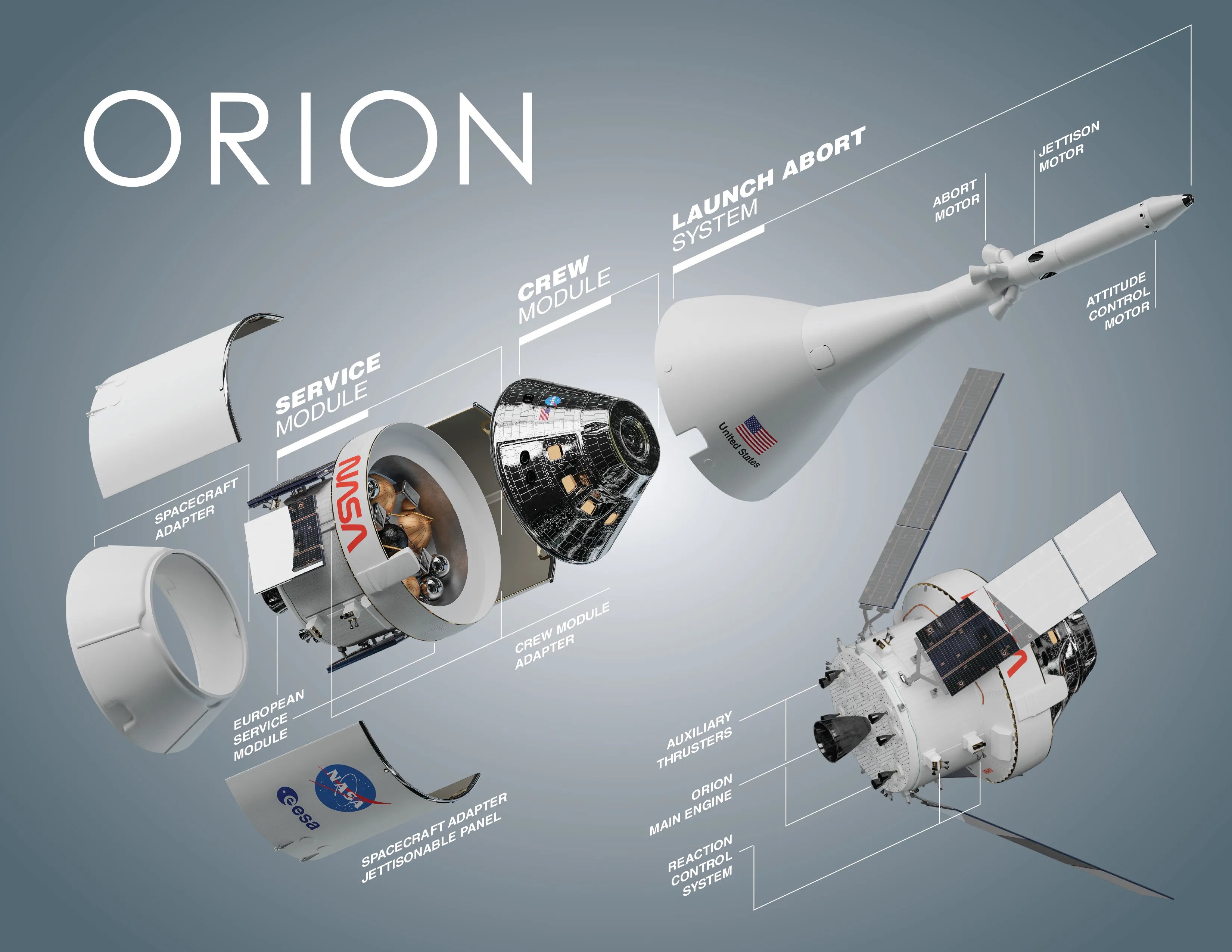
NASA has dosage level thresholds they’ll look for inside Orion. The first threshold signals a caution, prompting closer monitoring and coordination with medical and flight operations teams. A higher threshold triggers a recommendation for the crew to take shelter.
Radiation shielding in space is all about mass. Charged particles are slowed and absorbed as they pass through matter. Astronauts are trained to reconfigure their cabin during a solar particle event, removing stowed equipment from storage bays and securing it along areas of the cabin to add mass between themselves and incoming particles. Since Artemis II is the first crewed Artemis mission, testing this procedure in the Orion spacecraft is a major objective of the mission.
“Once crews add mass to the places that tend to be hotter in terms of radiation exposure, they can then continue to go about their duties,” George said.

The complexity of solar particle events is one reason NASA places spacecraft across the solar system. During a solar storm in January, NASA analysts tracked a coronal mass ejection on its way to Earth. When it arrived, satellites detected two distinct spikes in energetic particles where there would normally be one. Measurements from NASA’s BioSentinel CubeSat, deployed during the Artemis I mission, revealed what happened. The spacecraft, about 55 million miles away from Earth, detected a distinct eruption that later merged with the coronal mass ejection headed to Earth. Ultimately, two separate eruptions occurred.
The crew also must account for exposure to Earth’s radiation belts and galactic cosmic rays. The Van Allen Radiation Belts are two rings of high energy particles that surround our planet. Any mission headed to the Moon or farther must pass through them. Galactic cosmic rays are very high-energy particles from sources beyond our solar system. Together, the radiation exposure from these sources is expected to be comparable to a 1-month stay on the International Space Station, or about 5% of an astronaut’s career limit. Any exposure from solar radiation events would add to this baseline.
The Moon to Mars Space Weather Analysis Office, based at NASA Goddard, continuously assesses solar activity and any eruptions that occur. The team shares its analysis with the Space Radiation Analysis Group, based at NASA’s Johnson Space Center in Houston. Together, their forecasts and those from NOAA’s Space Weather Prediction Center, plus real-time measurements from inside the Orion spacecraft will inform recommendations for the flight control team.
By Miles Hatfield
NASA’s Goddard Space Flight Center, Greenbelt, Md.
Share
Details
Related Terms
Explore More



What's Your Reaction?