











Slice of Martian Meteorite Teghaza 001
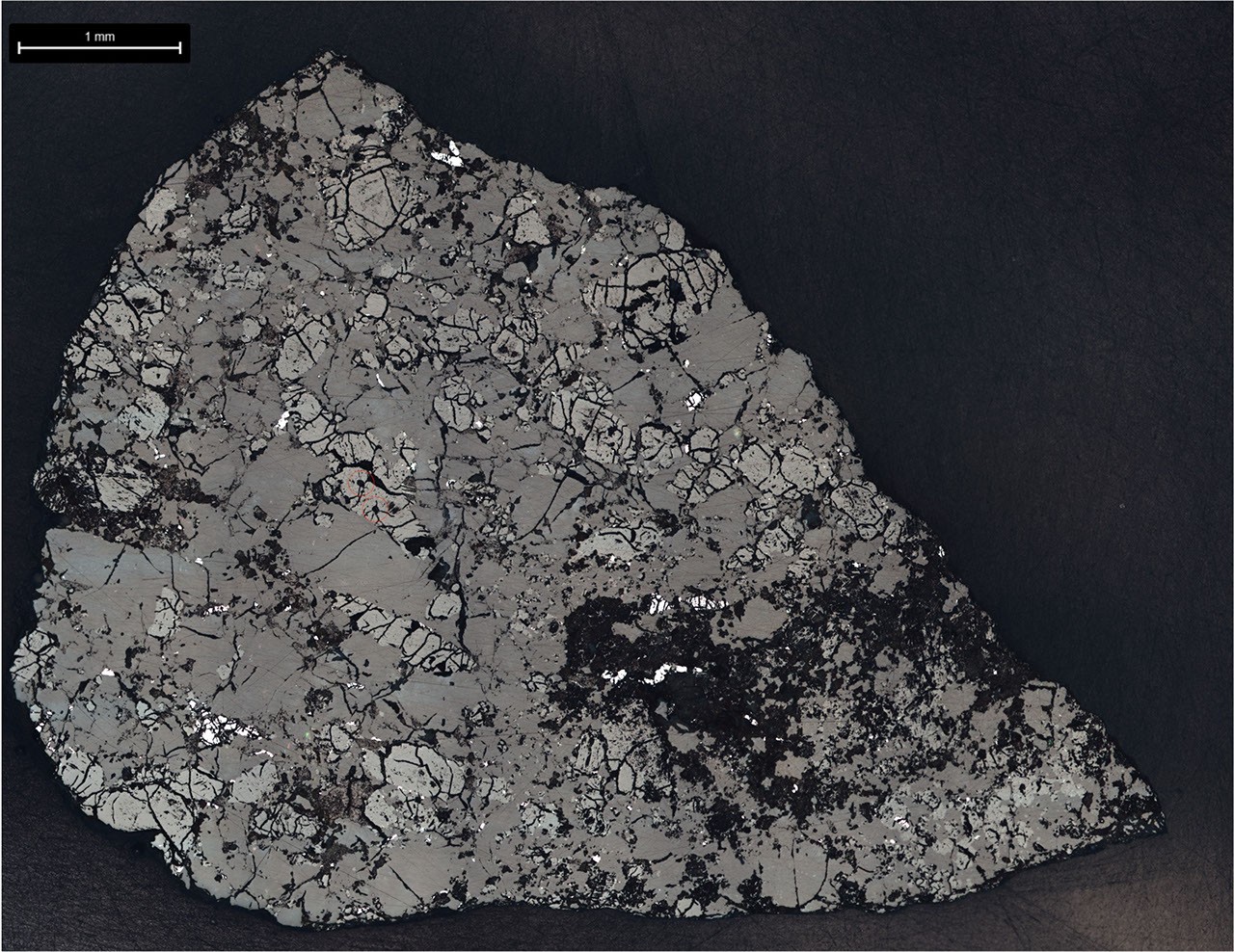
Description This slice of Teghaza 001, one of the most ancient Martian meteorites ever found on Earth, was used to determine the age of the rock. Reflected light images like these serve as a scientist’s road map, helping them find minerals of interest to analyze by different instruments. Figure A is the same image with […]
Slice of Martian Meteorite Teghaza 001

NASA/JPL-Caltech

Description
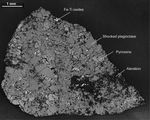
This slice of Teghaza 001, one of the most ancient Martian meteorites ever found on Earth, was used to determine the age of the rock. Reflected light images like these serve as a scientist’s road map, helping them find minerals of interest to analyze by different instruments.
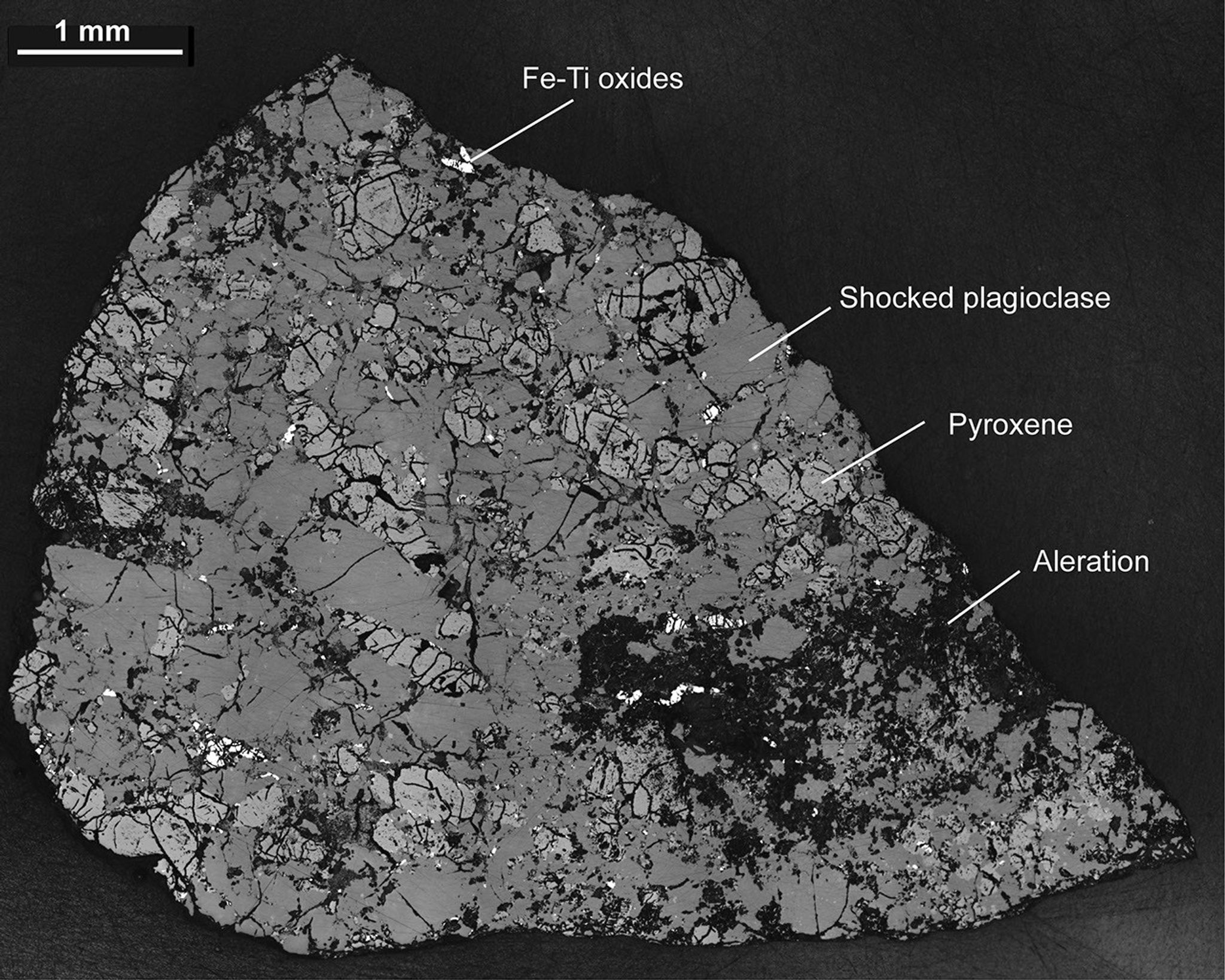
Figure A is the same image with annotations showing minerals like iron-titanium oxides (brighter grains) and pyroxene (medium gray), both of which tell a story about the formation of Mars’ crust and mantle. Shocked plagioclase (darker gray) is created by extreme pressures during impacts, including the one that sent Teghaza 001 flying through space to Earth. The alteration represents fine grain carbonate, sulfate and clay minerals formed on Earth.
What's Your Reaction?